
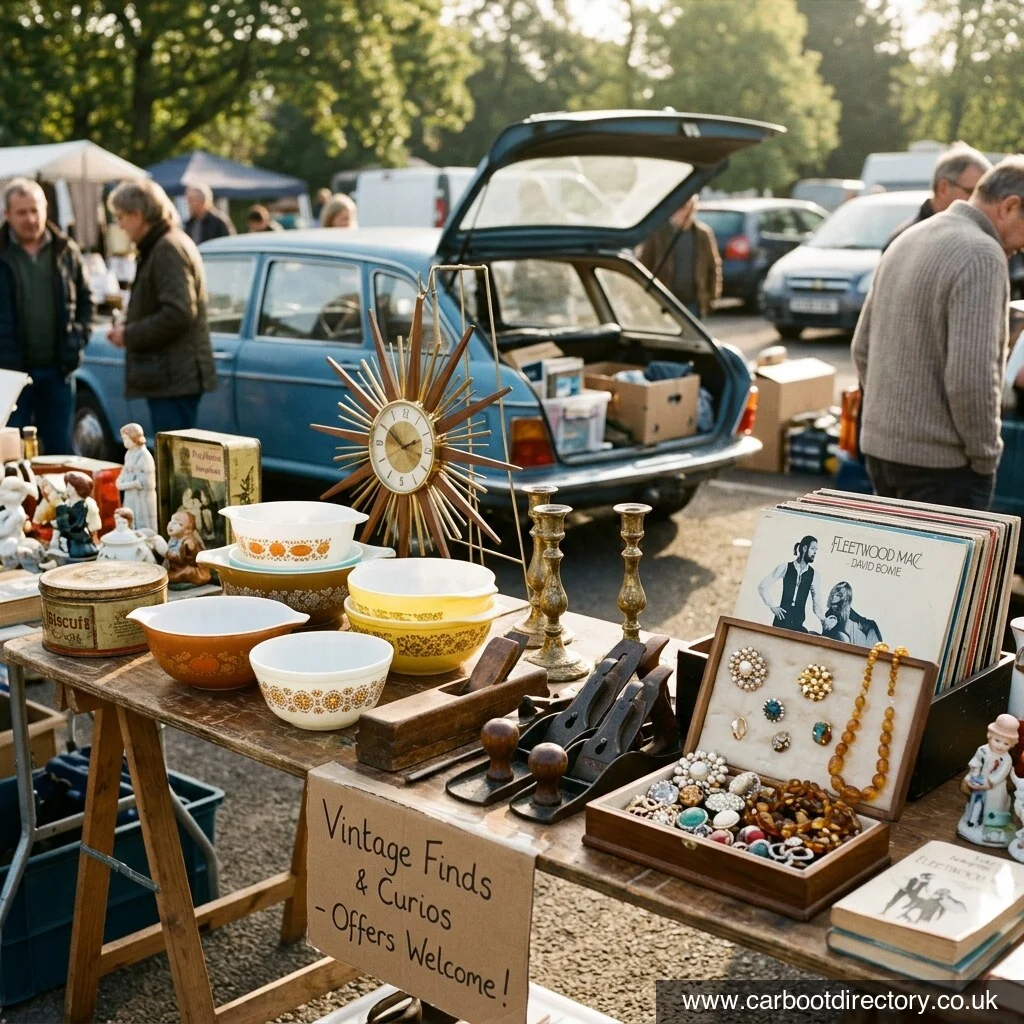
The best vintage finds at UK car boot sales are vinyl records, mid-century homeware, vintage Pyrex, old hand tools, costume jewellery, retro gaming and boxed toys — and the way to get them is arriving at opening and checking the maker’s marks before anyone else does.
Every boot field in Britain has a dealer walking it at 6:30am with a torch and a mental price list. This guide is that mental price list — the categories that consistently reward a sharp eye, how to check them in seconds, and the venues where vintage actually turns up.
What to look for, category by category
- Vinyl records: original pressings beat reissues — check the label and matrix number in the run-out groove. Crates priced “£1 each” are where first pressings hide.
- Mid-century homeware: teak bowls, sunburst clocks, Scandinavian-look lamps and sideboard smalls. Look for solid wood, original fittings and clean lines.
- Vintage Pyrex and kitchenware: patterned UK Pyrex, enamel bread bins, Tala measures. Pattern + lid + no chips = the trifecta.
- Old tools: Record and Stanley planes, Marples chisels, anything cast and stamped rather than moulded. Surface rust cleans; cracks don’t.
- Costume jewellery: check clasps and weight; signed pieces (Trifari, Monet, Miracle) sit unnoticed in £1 tubs.
- Retro gaming and toys: consoles with leads, boxed anything, complete board games. Completeness is the whole value.
- Books and ephemera: first editions with dust jackets, Ladybird and Observer books, old maps and local-history photographs.
The 10-second checks that separate finds from fakes
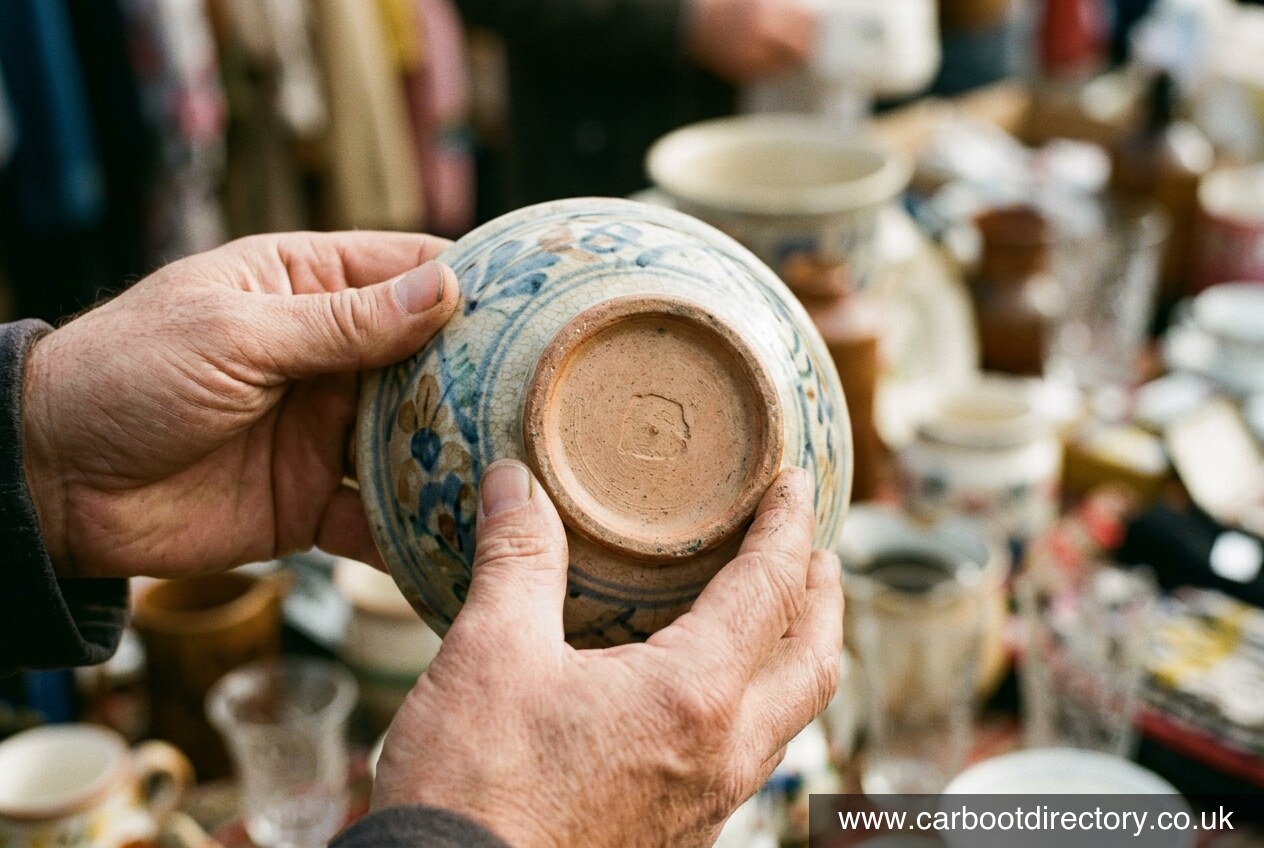
- Turn it over. Maker’s marks, hallmarks, backstamps and labels live on the underside. No mark doesn’t mean worthless — but a good mark means buy it now.
- Feel the weight. Solid brass, cast iron and dense hardwood feel right; modern copies feel light and hollow.
- Check completeness. Lids, leads, boxes, all the pieces — half a thing is worth a tenth of a whole thing.
- Buy first, research later. At boot prices the downside is a pound or two; the upside is the story you’ll tell for years. Hesitate and it’s gone.
Where vintage actually turns up
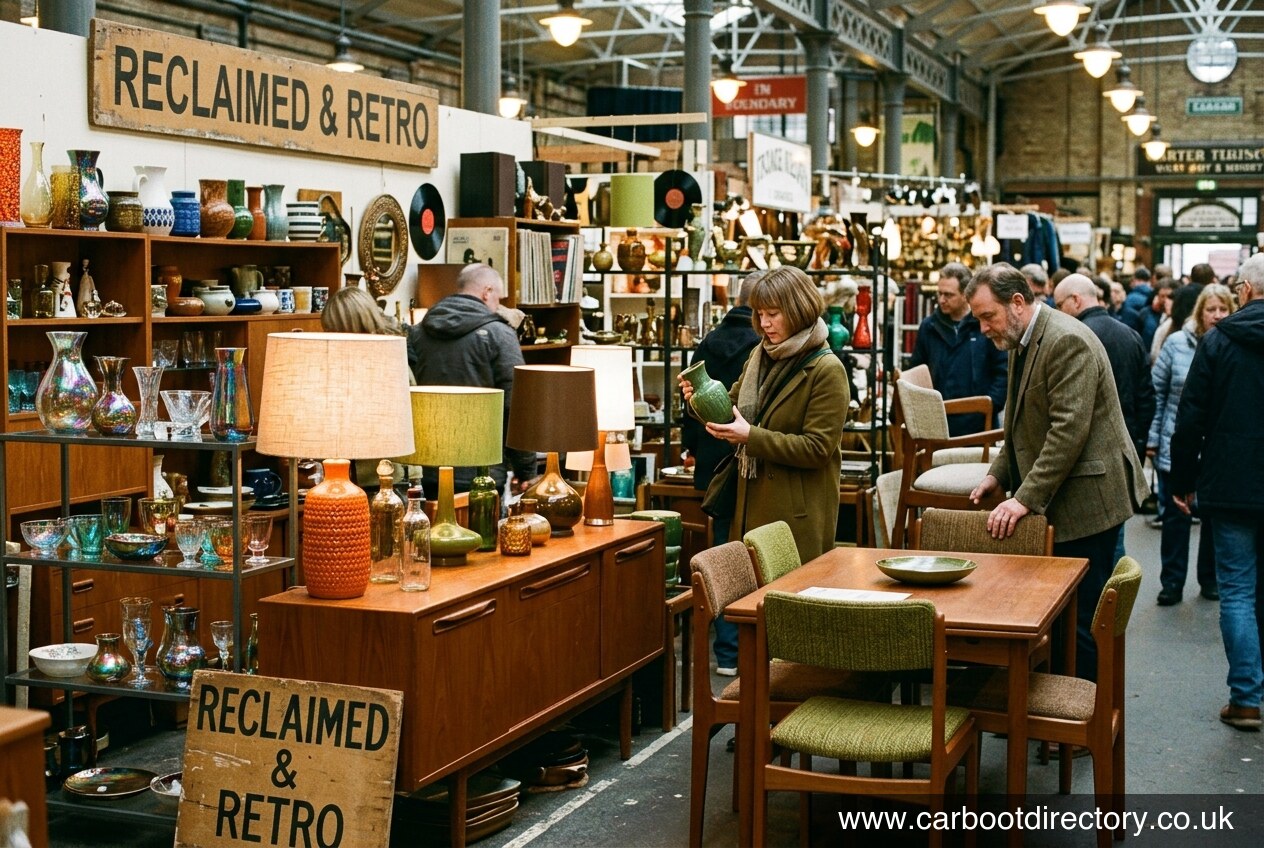
Any big Sunday boot can produce a find, but these listed venues lean vintage and antiques — dealers treat several of them as stock sources:
| Venue | Region | Day | Why collectors go |
|---|---|---|---|
| Alfies Antique Market | Greater London | Saturday | Indoor — design, vintage fashion, jewellery |
| Malvern Antique Fair | West Midlands | Sunday | Proper antiques fair, £4 entry |
| Sunbury Antiques Market | South East (Kempton Park) | Sunday | Legendary trade hunting ground |
| Kempton Antique Market | South East | Tuesday | Dealers buy here at dawn — £5 early, free after 8am |
| Ardingly Antique Fair | South East (W. Sussex) | Tuesday–Wednesday | One of the South's biggest fairs |
| Shepton Mallet Flea Market | South West (Somerset) | Sunday | Flea-market mix, strong on vintage |
Vintage hunting questions, answered
What vintage items are worth money at car boot sales?
Vinyl records, mid-century furniture and lamps, vintage Pyrex and kitchenware, old tools, costume jewellery, retro games consoles and boxed toys are the consistent earners. Condition and completeness drive the value more than age alone.
How do I spot valuable items quickly at a boot sale?
Check the underside first: maker’s marks on ceramics, hallmarks on metalware, labels in clothing, original boxes for toys. Weight is a clue too — solid usually beats hollow. When something feels special, buy first and research at home; it won’t wait.
When is the best time to find vintage at car boot sales?
At opening — dealers clear the obvious vintage within the first hour, which is why many pay early-bird entry. Winter indoor markets are an underrated second window: fewer casual buyers, so good pieces hang around longer.
Serious about first pick? Read the early-bird guide, keep winter mornings free for indoor markets, and check what sells best if you’re on the other side of the table. Then find your next hunting ground on the near-me search.