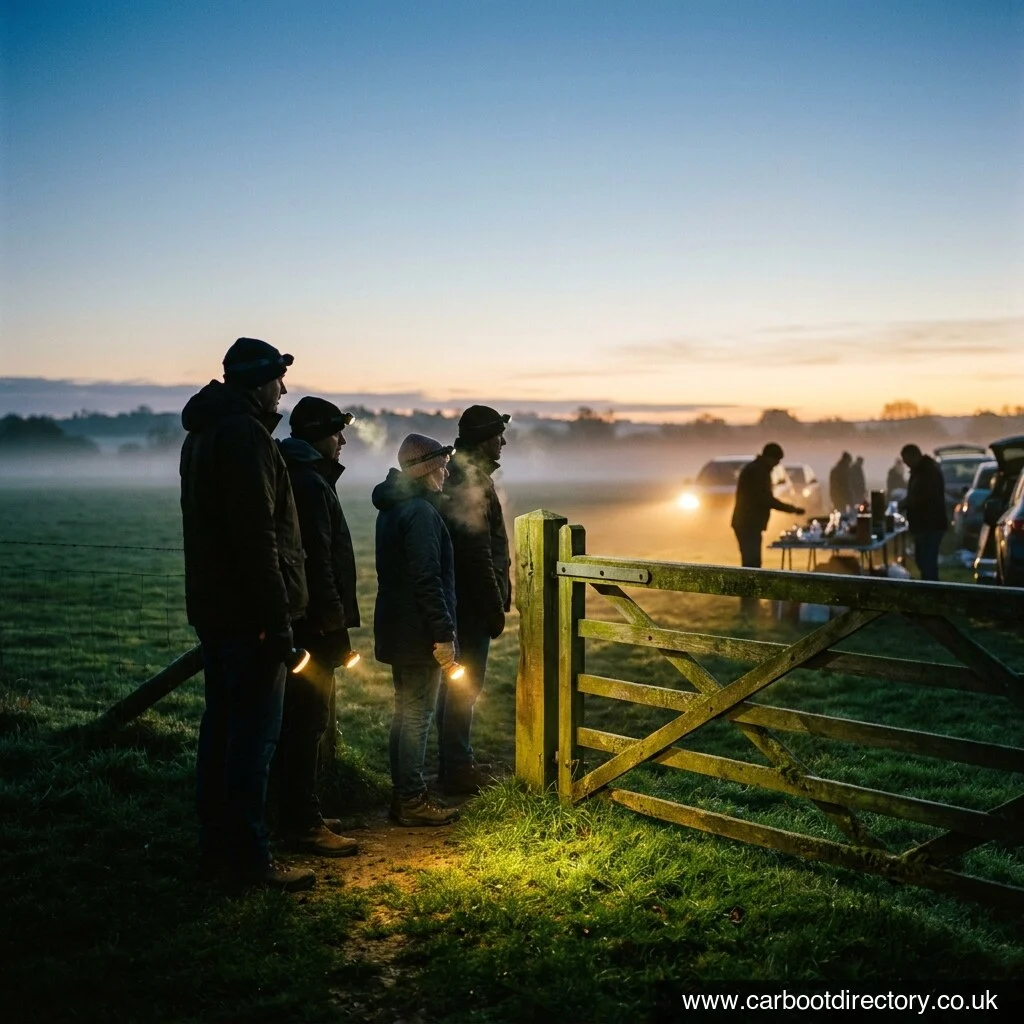
Early bird car boot entry typically costs £2–£5 (up to £7 in London) versus a standard £1 — and it buys you first pick of every stall before general opening. For dealers and collectors it usually pays for itself; for a casual mooch it's money better spent on the stalls.
The best things at any boot — the records, the tools, the underpriced china — are gone within the first hour. Early-bird pricing exists because organisers know it, sellers tolerate it, and serious buyers happily pay it. Here is how it works, what it really costs around the UK, and when it's worth it.
Real early-bird prices around the UK
Eight live examples from our directory (June 2026) — note how the fee drops as the morning goes on:
| Sale | Early-bird price | Standard price |
|---|---|---|
| Sutton Car Boot, Carshalton | £2 (6–8am) | £1 after |
| Thatcham Car Boot | £2 before 9am | £1 after |
| Pannal Car Boot (Harrogate) | £3 (9–11am) | £1.50 after 11am |
| Tallington Farm Shop Car Boot | £5 pro entry from 8:30am | £1 general |
| Cuffley Boot Sale (Herts) | £3 from 9am | £1 from 10am |
| Potters Bar Boot Sale | £3 before 10am | 50p from 11am |
| Willow Farm, Rainham | £3 per person before 6am | £1 per car after |
| Capital Carboot (London) | £7 early bird (10:15am) | £1 from 11:30am |
Who should pay for early entry?
- Resellers and dealers — yes. One £4 vinyl crate or underpriced power tool covers a month of early fees. This is where dealers do their buying.
- Collectors hunting something specific — yes. If you collect records, Lego, vintage Pyrex or tools, the difference between 7am and 9am is the difference between finding it and hearing about it.
- Furnishing on a budget — maybe. Furniture moves a little slower than smalls; standard opening is usually early enough.
- A family morning out — no. Arrive mid-morning when fees taper (some drop to 50p), the queues are gone and sellers are warming up to haggling.
Early-bird tactics that actually work
- Walk the field once, fast. Scan every stall for your categories before settling in to browse — you can come back for the maybes.
- Carry exact cash, ready. Early sellers are mid-setup and short on change; a ready £5 closes deals a £20 note loses.
- Ask, don't rummage. "Any records in the boxes?" gets you shown things still in the car — politely beating other early birds to them. Rummaging uninvited gets you nothing (see our etiquette guide).
- Know your prices. The early window is short — if you need to look something up for five minutes, it'll be in someone else's bag.
Early-bird questions, answered
What is early bird entry at a car boot sale?
A higher entry fee — typically £2–£5, up to £7 in London — that lets buyers in before general opening, often while sellers are still unpacking. You get first pick of every stall before the crowds arrive.Is early bird entry worth the extra money?
For resellers, collectors and anyone hunting specific items, yes — the best stock sells within the first hour, so a £3 head start pays for itself with one good find. For a casual browse, save the money and arrive at standard opening.Can I get in early without paying the early-bird fee?
No — and trying is the biggest etiquette breach at any boot. Sellers and organisers know the torch-brigade trick. If first pick matters to you, pay the early fee where it is offered.Every listing on this site shows the full fee ladder — early, standard and late — so you can plan the alarm clock. Start with sales near you or browse all car boot sales.
Find a car boot sale near you
Put the advice to use this weekend. Hand-checked sales with times, entry fees and directions.
Keep reading
Guides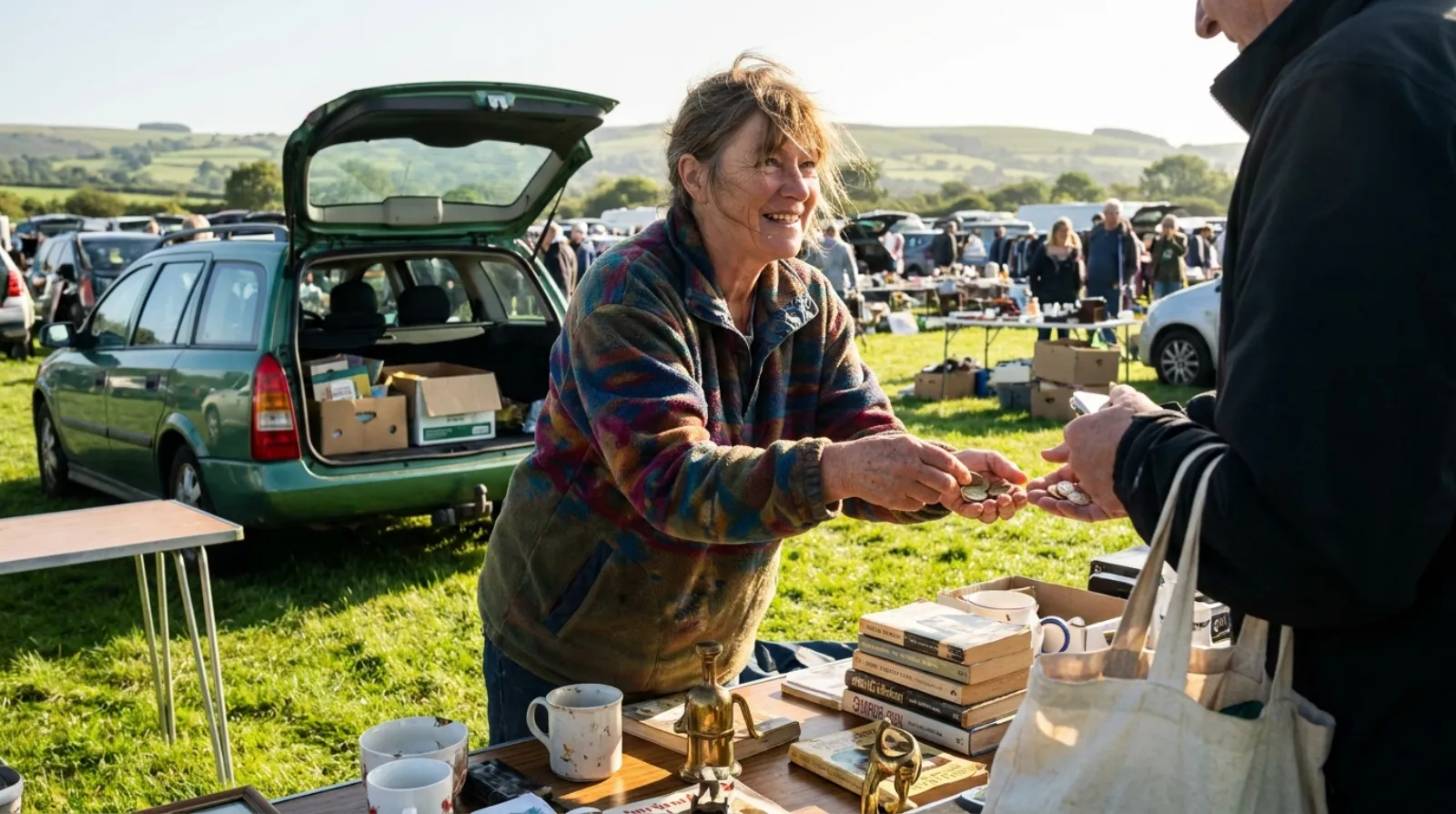
How Much Can You Make at a Car Boot Sale?
How much money can you make at a car boot sale? Most first-timers take £50 to £150 from a car load of household clutter. What decides it, what the pitch costs, and how to take more.
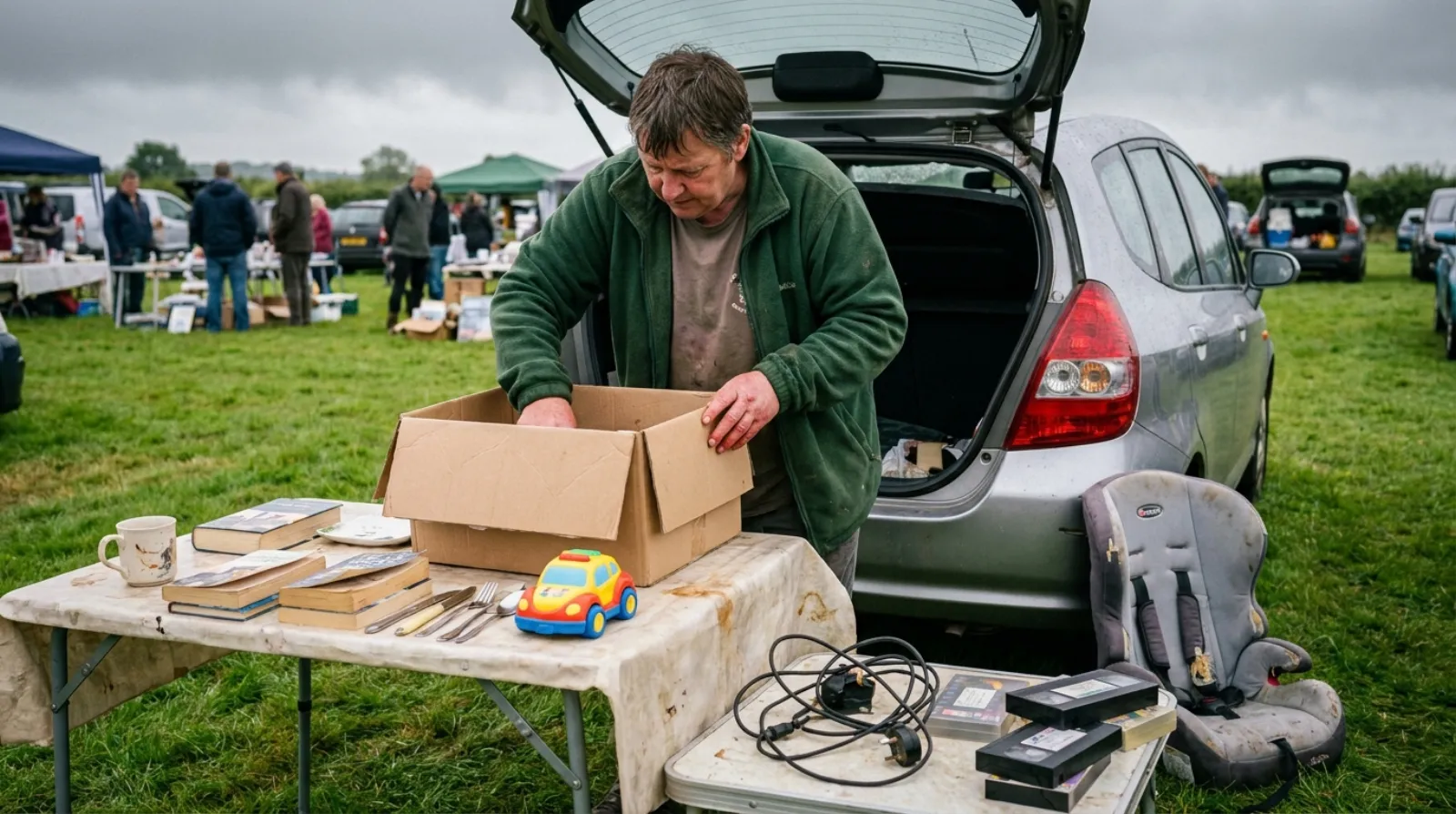
What Not to Sell at a Car Boot Sale (UK Rules)
What can't you sell at a car boot sale? Knives to under-18s, banned weapons, fireworks, alcohol, medicines, fakes and more are illegal or restricted. Plus the things that simply won't sell.

Car Boot Sale Rules UK: What You Can't Sell, Tax & Permission
What is illegal to sell at a car boot sale, when HMRC counts it as trading, whether you need permission to run one, and why they start so early.