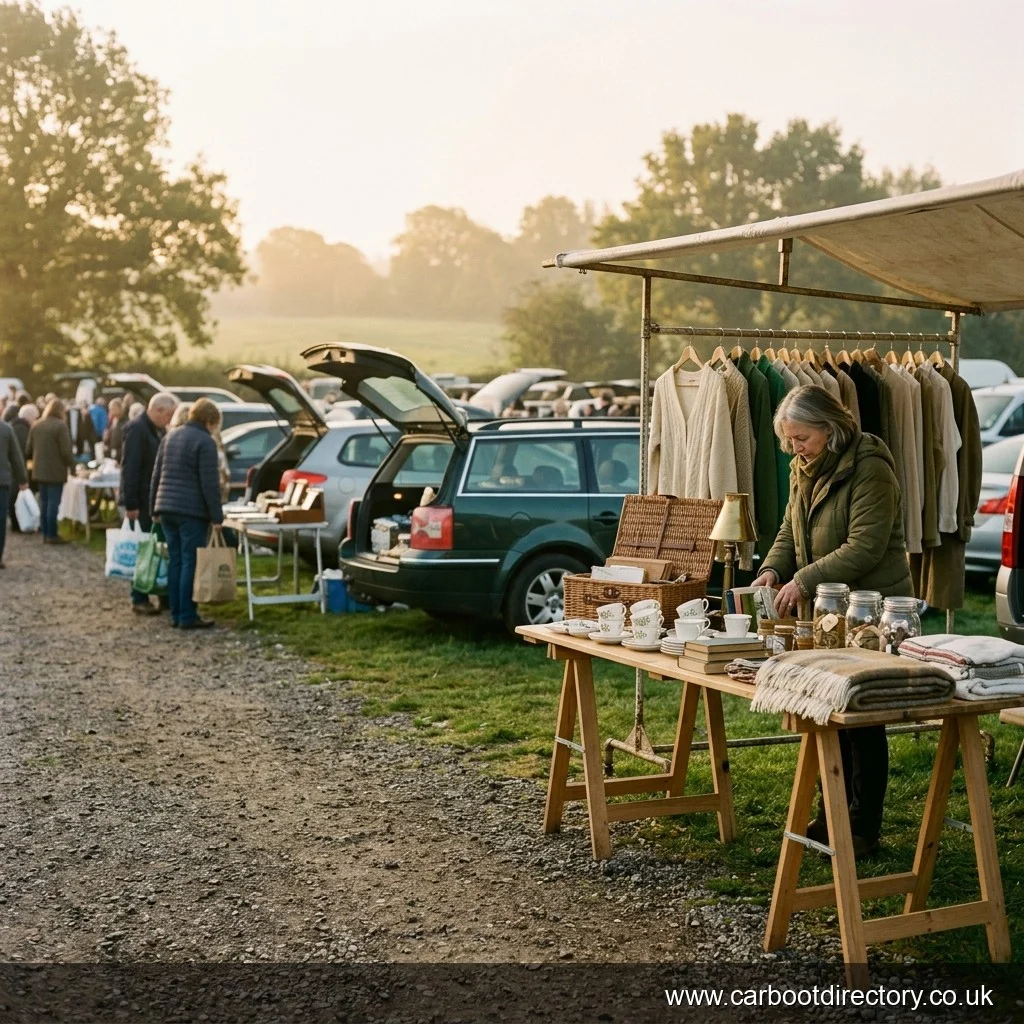
To sell well at a UK car boot sale, arrive 60-90 minutes before opening, bring a £25-£30 float in coins and small notes, price everything in round numbers (50p, £1, £2), display goods on a 6ft table at eye level, and be ready to haggle. Cash, weather cover and an early start matter most.
After more than a decade of Sunday mornings hauling crates across muddy fields, I've learned that a profitable pitch is about preparation, not luck. Below is the complete, tried-and-tested playbook I wish someone had handed me on my first boot. Once you're ready to trade, find your nearest event on our car boot sales near me page or browse all live listings.
Before the day: gather, sort and price
Win the boot the night before, not on the field. The sellers who clear the most stock are the ones who turned up packed, priced and prepared. Rushing to grab random boxes at 5am is how you leave money (and your phone charger) at home.
What to gather
Walk every room with two boxes: one for "definitely selling", one for "maybe". Clothes, kids' toys, kitchenware, books, DVDs, tools and small electricals are the bread-and-butter of any boot. Clean and test everything — a working kettle sells for £3, a dusty one sits all day. The fastest-moving categories I see week in, week out are children's clothes and toys (parents are always restocking), branded homeware, garden tools and anything retro or vintage. If you have a lot of one type of item — say 40 CDs or a box of cables — bag or band them in tens so a buyer can grab a job lot rather than picking one at a time.
The packing checklist
Pack the kit, not just the stock. Half the battle on the day is logistics. Here's the exact list I run through every Saturday night:
- Folding table (6ft / 1.8m is the sweet spot — big enough to display, small enough to carry)
- A second small table or clothes rail for hanging garments
- Old bedsheet or tablecloth to cover the table (instantly looks tidier)
- £25-£30 float: a roll of £1 coins, plenty of 50p and 20p, plus 10x £1 notes and 5x £5 notes
- Bumbag or money belt — never a cash box left on the table
- Carrier bags and a few bin bags for buyers
- Marker pens, sticky labels and a roll of masking tape for pricing
- Folding chair, flask, water and snacks
- Wellies, gloves and a waterproof coat (yes, even in June)
- Tarpaulin or gazebo for shade and rain cover
- Phone power bank and a notepad
How to price before you go
Price the night before so the morning is just selling. Pricing on the field while a crowd circles is stressful and leads to giveaway mistakes. A rough rule: charge 10-20% of the original retail price for used goods in good condition. Use round numbers only — 50p, £1, £2, £5 — because fiddly prices like 75p slow every transaction and you rarely have the change.
The change float: get this exactly right
A £25-£30 float in the right denominations is non-negotiable. Your first ten customers will all hand you a £20 note for a £1 item. Run out of change and you'll lose sales while a queue forms. My proven float: 20x £1 coins, 20x 50p, 10x 20p, 10x £1 notes (if you have them) and 5x £5 notes. Keep notes folded separately from coins in your money belt. Go to the bank or supermarket cashback desk a few days before — you cannot magic up a roll of 50p pieces at 5am. As notes build up through the morning, peel off the £10s and £20s and tuck them away separately so your working float stays full of the change buyers actually need.
What time to arrive: the early-bird rule
Arrive 60-90 minutes before the public gates open. If buyers are let in at 7am, you want to be parked and pitched by 5:30-6am. The first 90 minutes are the busiest and most profitable — dealers and keen collectors arrive early and pay near your asking price. Turn up late and you'll be setting up while the best buyers walk past. Check exact opening times on each event's page; many of the busiest are our car boot sales this Sunday and Saturday car boot sales.
Pitch setup: table layout and display
Display sells; piles don't. A buyer decides in two seconds whether your pitch is worth a look. The goal is to make browsing easy and tempting.
- Put your most eye-catching, valuable items at the front edge and at eye level — never buried in a box on the floor.
- Group like with like: all kitchenware together, all toys together. Confused buyers walk on.
- Hang clothes on a rail rather than folding them in a crate — hung garments sell for double.
- Stand items upright so titles and labels face the buyer (books, DVDs, framed prints).
- Keep a clear walk-up gap so people can reach the table without feeling crowded.
- Keep a "50p box" and an "everything £1" box for quick impulse buys and to shift bulk at the end.
Bring this | Why — the essentials table
| Bring this | Why |
|---|---|
| 6ft folding table | Raises stock to eye level; far more sales than ground displays |
| £25-£30 float in coins | You can't take £20 notes for 50p items without it |
| Money belt / bumbag | Keeps cash on your body — theft from tables is common |
| Clothes rail | Hung clothes sell for roughly double folded ones |
| Gazebo or tarp | Rain or fierce sun will otherwise end your day early |
| Carrier bags | Buyers purchase more when they can carry it easily |
| Marker pens & labels | Price anything you missed; answer "how much?" instantly |
| Flask & snacks | You can't leave an unattended stall to find a coffee van |
Selling psychology: pricing and haggling
People come to a boot sale to haggle — build it into your prices. If you want £1 for something, label it £1 expecting to take 50p-75p. Never look offended by a low offer; a friendly "go on then" keeps the buyer happy and the cash flowing. Volume beats holding out for top price.
Round numbers speed everything up and let buyers do the maths in their heads: three items at £1, £1 and 50p is an easy "£2.50, call it £2". Bundle deals shift slow stock fast — "any three of these for £1" empties a box in minutes. Smile, make eye contact and let people browse without hovering; a pushy seller scares buyers off.
Do's and don'ts
Small habits separate the sell-out stalls from the also-rans.
- Do price everything — unpriced items get ignored by shy buyers.
- Do keep a tidy, restocked table all morning; fill gaps from your reserve boxes.
- Do say yes to early dealers — their cash at 6am is as good as anyone's.
- Do drop prices after 9am to clear stock rather than re-pack it.
- Don't leave your cash unattended — ever.
- Don't argue over 50p; the goodwill is worth more than the coin.
- Don't sell counterfeit goods, weapons, or anything dodgy — you can be ejected or fined.
- Don't pack precious or sentimental items "just in case" — you'll regret selling them cheap.
Cash handling and safety
Treat your takings like the cash they are. Keep all money in a belt worn at the front, never in a tin on the table or a back pocket. Periodically transfer larger notes to a separate, zipped inner pocket or back to the car so you're never carrying a visible wad. Work in pairs if you can — one to sell, one to watch the stall and take comfort breaks. Count your float before you start so you know your true profit at the end.
Weather: plan for British conditions
The weather will turn — assume it. A clear forecast can flip to drizzle by 8am. Bring a tarpaulin or pop-up gazebo to keep both you and your stock dry, and pack everything paper-based (books, prints) in covered boxes you can close fast. On hot days, shade stops vinyl, candles and electronics from cooking. If rain is forecast all day, consider an indoor car boot sale instead — smaller crowds but no weather risk and a captive audience.
Packing up: end the day right
Don't take it home if you can help it. From around 9-10am, footfall drops and your job switches from profit to clearance. Slash prices, shout bundle deals and fill bargain boxes. Anything left over has three good homes: a charity shop, a local Facebook selling group, or your next boot. Bag your unsold stock by category as you pack so you're already sorted for next time, take your rubbish with you, and leave the pitch clean — organisers remember tidy sellers.
Ready to sell? List your spot
The best preparation is picking the right sale. A busy, well-run event with hundreds of buyers beats a quiet field every time. Browse upcoming events on our full listings, find one close by on car boot sales near me, or if you run an event yourself, add a sale to reach thousands of local buyers and sellers. Pack smart, arrive early, price in round numbers — and you'll drive home with empty crates and a full money belt.
How much float should I bring to a car boot sale?
Bring £25-£30 in mixed change: roughly 20x £1 coins, 20x 50p, 10x 20p and a few £1 and £5 notes. Your first customers will all pay for 50p items with £10 and £20 notes, so plenty of small change is essential to avoid losing sales.What time should I arrive to sell at a car boot sale?
Arrive 60-90 minutes before the public gates open. If buyers are let in at 7am, aim to be parked and pitched by 5:30-6am. The first 90 minutes are the busiest and most profitable, as keen dealers and collectors shop early and pay close to your asking price.How should I price items at a car boot sale?
Price used goods at roughly 10-20% of their original retail value and always use round numbers (50p, £1, £2, £5). Round prices speed up transactions and make change easy. Label things slightly higher than your minimum, as most buyers will expect to haggle you down a little.Do I need a table to sell at a car boot sale?
Yes — a 6ft folding table dramatically boosts sales because it raises your stock to eye level. Items displayed on a table sell far better than those left in boxes on the ground. A clothes rail also helps, as hung garments typically sell for double the price of folded ones.Is haggling normal at UK car boot sales?
Absolutely. Haggling is part of the experience and most buyers expect it. Price items a little above your minimum, stay friendly, and accept reasonable offers — volume of sales beats holding out for top price. Bundle deals like 'any three for £1' shift slow stock quickly.What should I do with unsold items at the end?
From around 9-10am, drop prices and offer bundle deals to clear stock. Anything left can go to a charity shop, a local Facebook selling group, or your next boot sale. Bag unsold items by category as you pack so you're ready to go again next time.Find a car boot sale near you
Put the advice to use this weekend. Hand-checked sales with times, entry fees and directions.
Keep reading
Guides
How Much Can You Make at a Car Boot Sale?
How much money can you make at a car boot sale? Most first-timers take £50 to £150 from a car load of household clutter. What decides it, what the pitch costs, and how to take more.
What Not to Sell at a Car Boot Sale (UK Rules)
What can't you sell at a car boot sale? Knives to under-18s, banned weapons, fireworks, alcohol, medicines, fakes and more are illegal or restricted. Plus the things that simply won't sell.

Car Boot Sale Rules UK: What You Can't Sell, Tax & Permission
What is illegal to sell at a car boot sale, when HMRC counts it as trading, whether you need permission to run one, and why they start so early.