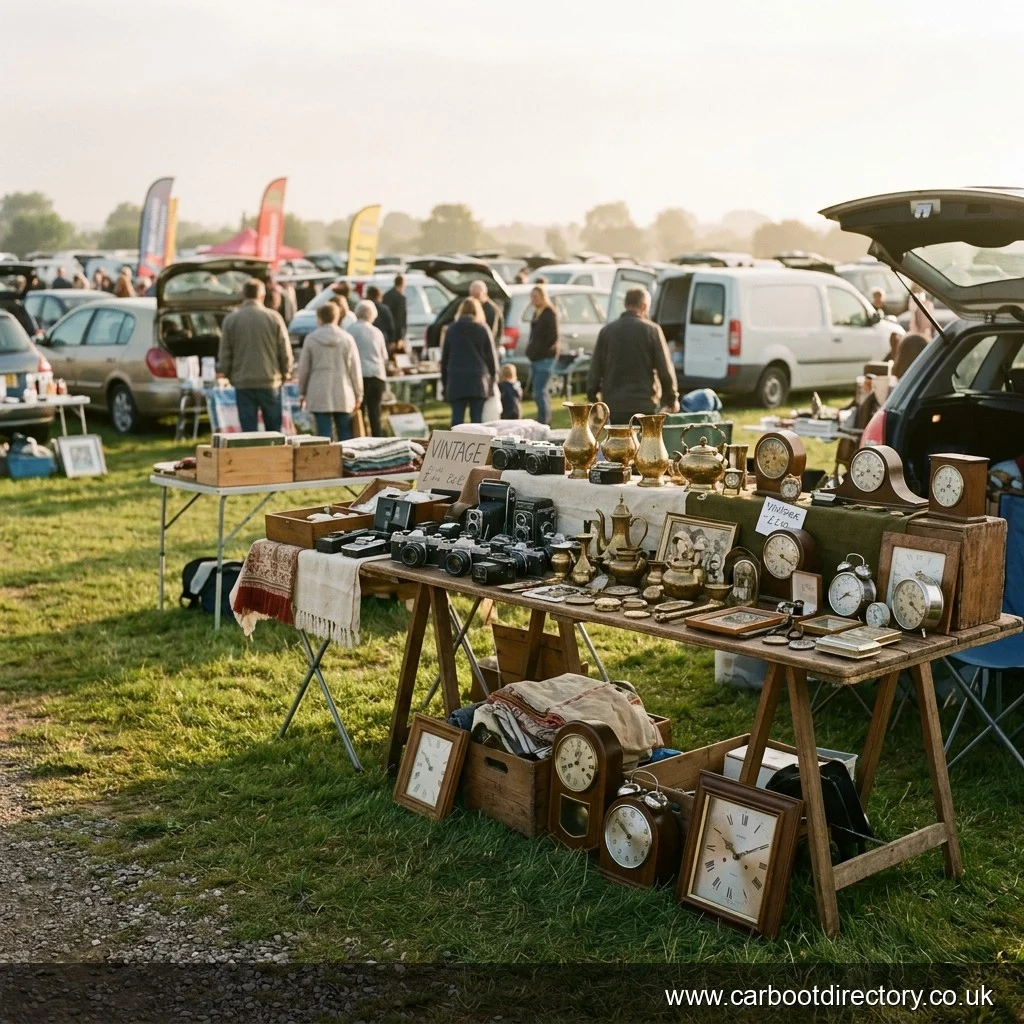
A car boot sale is an outdoor event where ordinary people sell unwanted items from their car boot; a flea market is run by regular traders selling vintage, antiques and collectables; and a table-top sale is an indoor event where sellers hire a table.
The quick comparison
All three are bargain-hunting staples of the British weekend, but they differ in setting, who sells and what you'll find. The biggest divide is indoors versus outdoors and amateur sellers versus professional traders.
| Format | Where | Sellers | Typical goods | Weather-proof? |
|---|---|---|---|---|
| Car boot sale | Outdoor fields, car parks | Members of the public clearing out | Household clutter, toys, clothes, bric-a-brac | No |
| Indoor car boot | Halls, warehouses, leisure centres | Mix of public and casual traders | Similar to outdoor, plus some new stock | Yes |
| Flea market | Town squares, dedicated market halls | Regular traders and dealers | Vintage, antiques, retro, collectables | Sometimes |
| Table-top sale | Church halls, schools, community centres | Public hiring a table (often charity) | Crafts, books, baby items, homeware | Yes |
| Antique fair | Showgrounds, hotels, halls | Specialist antique dealers | Genuine antiques, fine collectables | Usually |
What is a car boot sale?
A car boot sale is the quintessential British weekend treasure hunt. Sellers pay a small pitch fee (typically £5–£15), park up in a field or car park, and sell directly from the boot of their car and a fold-out table. The defining feature is that sellers are ordinary people having a clear-out, not professional traders — which is exactly why prices are so low and bargains so plentiful.
You'll find everything from children's toys and DVDs to garden tools, clothes and the occasional hidden gem. Arrive early for the best pickings; arrive late for the lowest prices as sellers slash costs rather than pack up. Bring plenty of small change, sturdy bags and comfortable shoes — these events sprawl across muddy fields and the dealers who turn up at dawn with torches know that the best antiques and collectables are gone within the first hour. Most outdoor car boots run on Sunday mornings from spring through to early autumn, though many keep going into the colder months if the venue allows.
For sellers, the appeal is obvious: a car boot sale is the fastest, cheapest way to turn a loft full of clutter into cash in a single morning. There's no listing fee, no postage and no waiting for an online buyer — you simply price to sell and watch the bric-a-brac walk away. The trade-off is that you're entirely at the mercy of the weather and footfall on the day.
What does "boot fair" mean?
"Boot fair" is simply a regional name for a car boot sale, used especially across Kent and the wider South East of England. If you're searching for a "boot fair" you're looking for exactly the same thing as a car boot sale — the term is just local dialect. You can browse events across the region on our South East listings.
What is a flea market?
A flea market sits a notch up the scale. Here, the sellers are largely regular traders and dealers who attend week after week, specialising in vintage clothing, retro homeware, antiques, vinyl records and curated collectables. Where a car boot is about volume and clearing clutter, a flea market is about character and considered finds.
Prices tend to be higher than a car boot sale because stock is hand-picked, but you can still haggle — a polite offer is part of the culture, and most traders build in room to move. Famous UK examples include London's bustling street markets and dedicated vintage flea markets in most major cities, many of which run indoors or under cover. Because the same sellers return regularly, you can build relationships, ask them to look out for specific pieces, and trust that the goods have been sourced with a knowing eye.
Flea market vs car boot: how to tell them apart
- Sellers: Car boots are everyday people; flea markets are repeat traders.
- Stock: Random household items versus curated vintage and antiques.
- Price: Pennies and pounds versus considered mid-range pricing.
- Vibe: Chaotic treasure hunt versus browsable, styled stalls.
What is a table-top sale?
A table-top sale moves everything indoors. Sellers book a table — usually for a fixed fee paid to the venue or a charity — inside a church hall, school or community centre, and lay out their goods. Because it's under a roof, a table-top sale runs whatever the weather and is the friendliest format for first-time sellers.
Table-top sales are frequently fundraisers run by schools, churches, scout groups and local charities, so they have a warm, community feel. Expect crafts, books, baby and children's items, homeware and handmade goods. They're smaller and calmer than a sprawling field, which suits browsers who dislike crowds and parents with young children. The table fee is typically modest — often £5 to £10 — and much of it goes to a good cause, so you can shop with a clear conscience. For more on indoor formats, see our guide to indoor car boot sales, which work on a similar all-weather principle and let you sell or browse in comfort all year round.
Indoor car boots and antique fairs
Two close cousins are worth knowing:
- Indoor car boot sales — the car boot format moved into a hall or warehouse. You still get bargain household goods and amateur sellers, but with heating, lighting and no risk of rain. Perfect for winter months.
- Antique fairs — the most specialist end, where vetted dealers sell genuine antiques and fine collectables. Prices are highest here, but so is the quality and authenticity.
Which suits you best?
Your choice depends on whether you're buying or selling, and what you're after.
If you're a buyer
- Hunting rock-bottom bargains? A car boot sale wins every time.
- After vintage style and antiques? Head to a flea market or antique fair.
- Want a calm, indoor browse? A table-top sale or indoor car boot is ideal.
If you're a seller
- Lots of household clutter to shift fast? Book a car boot pitch.
- Selling vintage or crafts regularly? A flea market stall builds repeat customers.
- Nervous first-timer or fundraising? A table-top sale is low-cost and low-stress.
Whatever you're selling, an indoor format removes the single biggest gamble: the British weather. If you run an event, you can add your sale to our directory for free.
The weather factor
Weather is the great divider. Outdoor car boot sales and many flea markets live or die by the forecast — a wet Sunday means cancelled events and soggy stock. Table-top sales, indoor car boots and antique fairs run rain or shine, which is why they dominate the autumn and winter calendar across the UK. Before you set off, always check the organiser's social media or our listing page for last-minute cancellations, as outdoor events can be called off at short notice when the ground is waterlogged or high winds are forecast. A little planning saves a wasted journey and an empty boot.
Find a sale near you
Ready to go hunting? Browse every format in one place. Use our near me search to find events on your doorstep, explore all upcoming car boot and table-top listings, or filter by indoor options if rain is forecast. Whether you call it a boot fair, a flea market or a table-top sale, there's a bargain waiting nearby.
What is the difference between a car boot sale and a flea market?
A car boot sale features ordinary members of the public selling unwanted household items from their car, with rock-bottom prices. A flea market is run by regular traders and dealers selling curated vintage, retro and antique goods, usually at higher prices.What does 'boot fair' mean?
'Boot fair' is simply a regional name for a car boot sale, used especially in Kent and the South East of England. It refers to exactly the same type of outdoor bargain event.What is a table-top sale?
A table-top sale is an indoor event where sellers hire a table in a hall, school or community centre to sell their goods. It runs whatever the weather and is often a charity fundraiser, making it ideal for first-time sellers.Are there indoor car boot sales?
Yes. Indoor car boot sales take the usual bargain-hunting format into a heated hall or warehouse, so they run rain or shine. They are especially popular during autumn and winter.Which is cheaper, a car boot sale or a flea market?
Car boot sales are almost always cheaper, because sellers are everyday people clearing out rather than traders. Flea markets cost more as stock is hand-picked vintage and antiques, though you can still haggle.Where can I find a car boot or table-top sale near me?
Use the 'near me' search on Car Boot Directory to find events on your doorstep, or browse the full listings and filter by indoor options if the weather looks poor.Find a car boot sale near you
Put the advice to use this weekend. Hand-checked sales with times, entry fees and directions.
Keep reading
Guides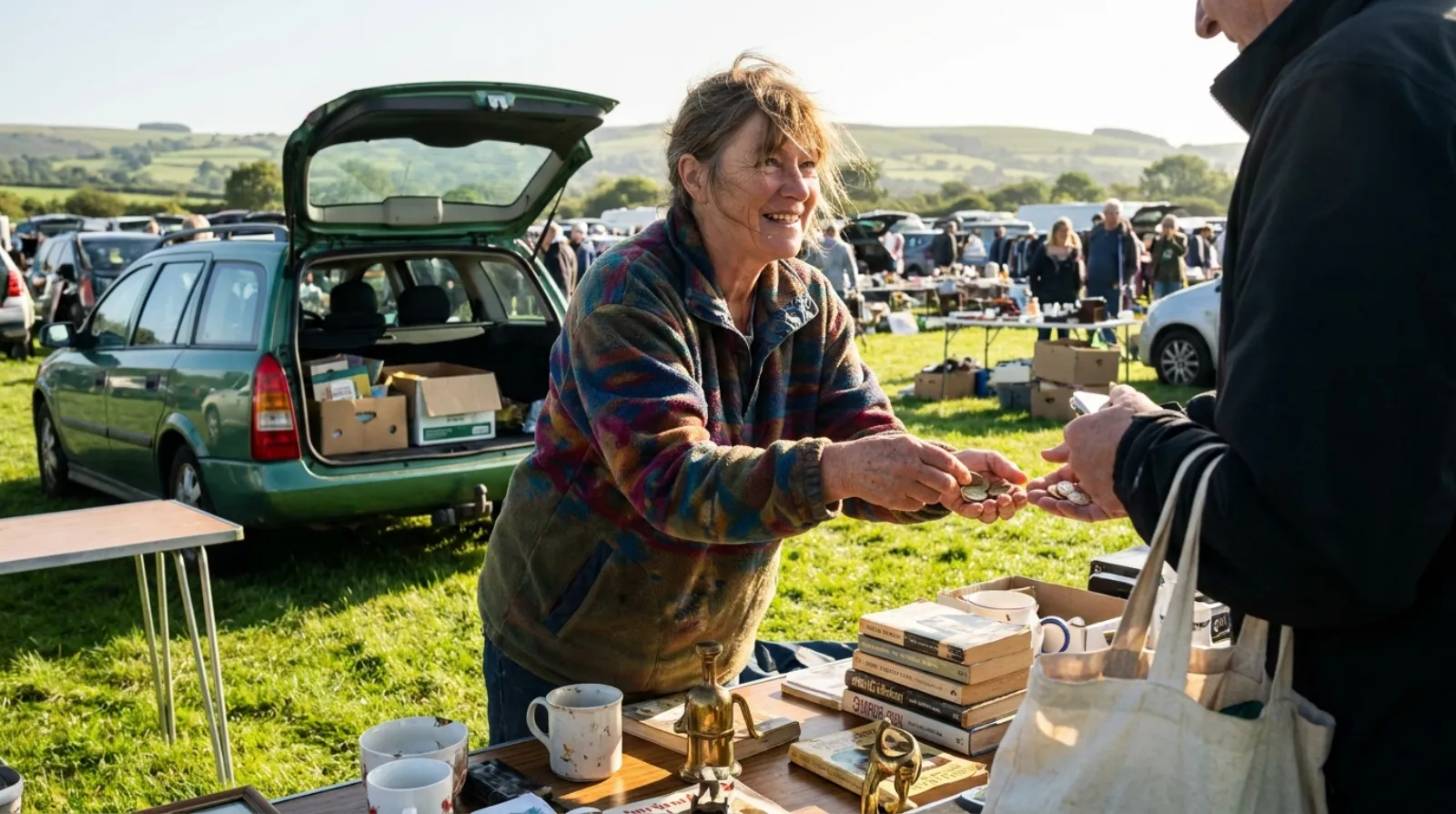
How Much Can You Make at a Car Boot Sale?
How much money can you make at a car boot sale? Most first-timers take £50 to £150 from a car load of household clutter. What decides it, what the pitch costs, and how to take more.
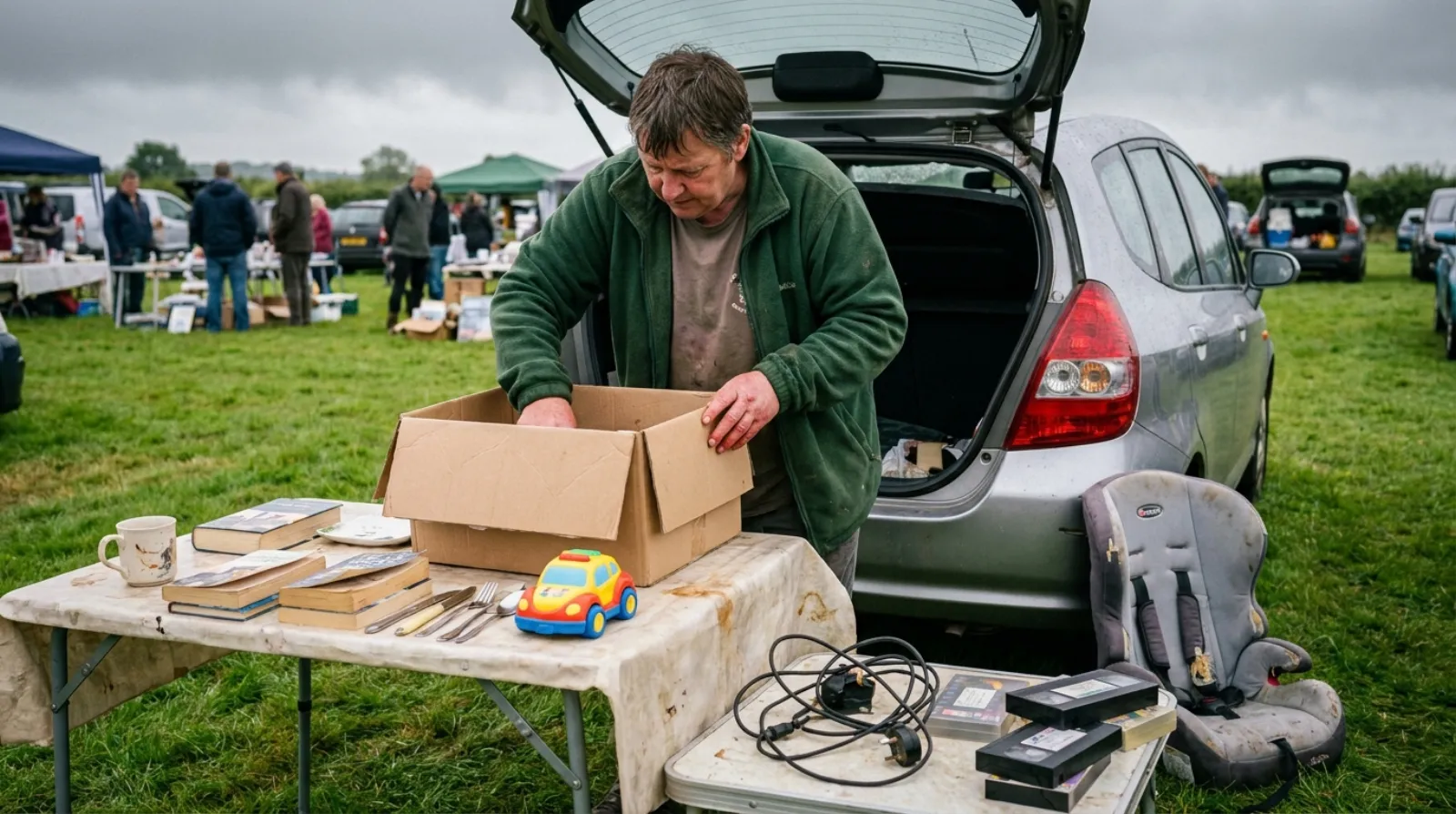
What Not to Sell at a Car Boot Sale (UK Rules)
What can't you sell at a car boot sale? Knives to under-18s, banned weapons, fireworks, alcohol, medicines, fakes and more are illegal or restricted. Plus the things that simply won't sell.

Car Boot Sale Rules UK: What You Can't Sell, Tax & Permission
What is illegal to sell at a car boot sale, when HMRC counts it as trading, whether you need permission to run one, and why they start so early.