
Buying at a car boot sale means arriving with cash and a plan. Get there early for the best pick, bring small change and sturdy bags, inspect everything before you pay, and haggle politely with round-number offers. Bargains reward the prepared.
What is a car boot sale, and why bother?
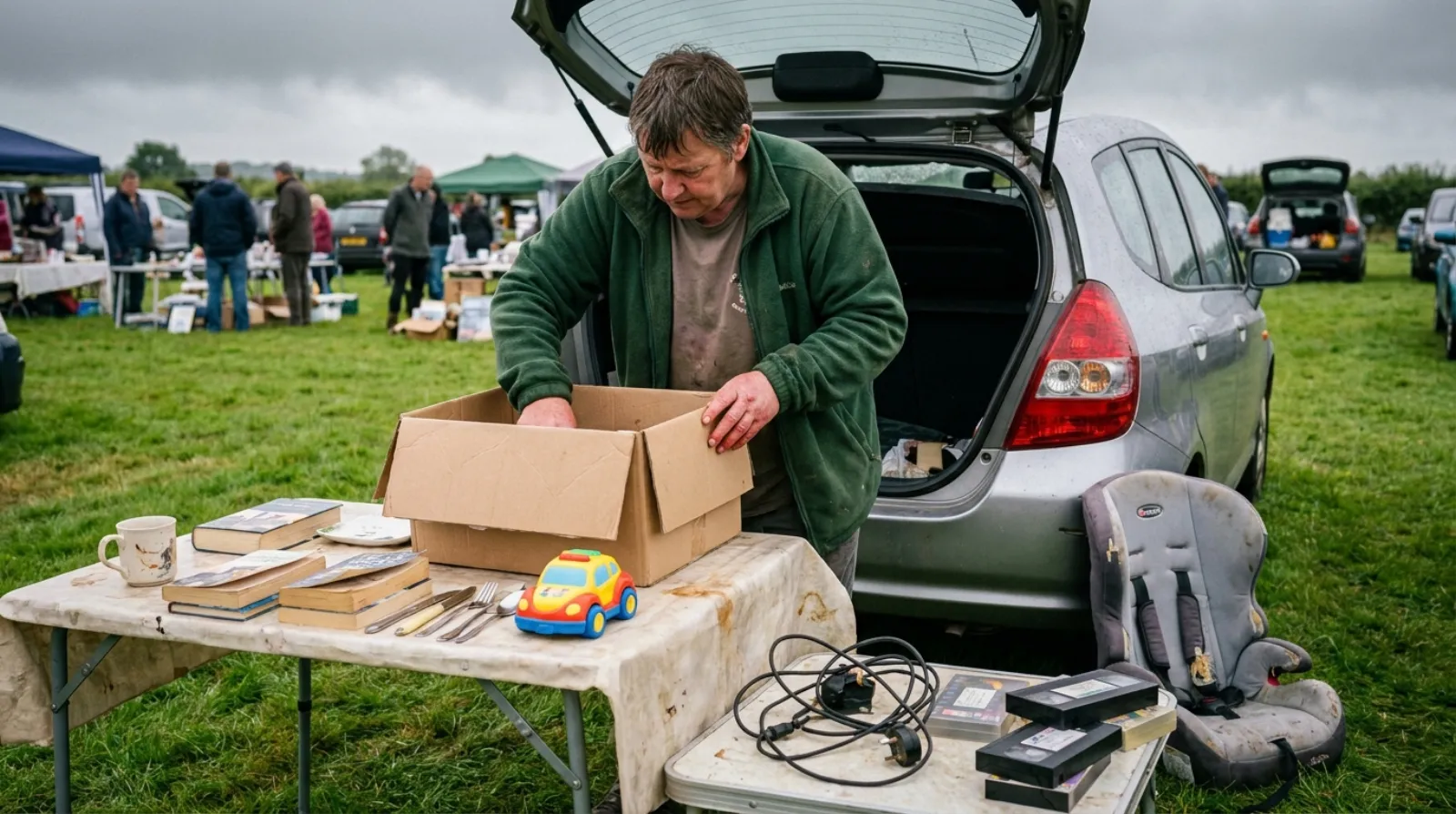
A car boot sale is a temporary open-air market where ordinary people sell second-hand goods from the boot of their car, usually for a few pounds a pitch. You will find everything from vinyl records and vintage glassware to tools, toys, kitchenware and the occasional genuine antique. For buyers, it is the cheapest way in Britain to furnish a flat, kit out a hobby or hunt for collectables.
The golden rule: turn up prepared, and you will out-buy everyone who didn't. Use our car boot sales near me finder to see what is on locally, or jump straight to what's running this Sunday.
What to bring to a car boot sale
The right kit is the difference between bagging a bargain and walking past it. Sellers love a buyer who can pay the exact amount and carry their finds away without fuss.
| Bring this | Why it matters |
|---|---|
| Plenty of small change and £1/£2 coins | Most pitches can't break a £20 note at 7am; exact money speeds the deal and helps you haggle. |
| Strong bags-for-life and a few carriers | Sellers rarely provide bags; you'll need to carry crockery, books and bric-a-brac safely. |
| A retractable tape measure | Check furniture, frames and rugs will actually fit your space before you commit. |
| Hand gel and wet wipes | Goods are dusty and there's rarely a sink on a field; clean hands before food too. |
| A fully charged phone | Look up makers' marks, check resale prices and pay if a seller takes bank transfer. |
| Wellies or sturdy boots | Most boot sales run on grass or farmland that turns to mud after rain. |
| A small torch | Inspect hallmarks, chips and serial numbers in poor early-morning light. |
Pack a "buyer's kit" the night before so a 6am alarm doesn't catch you out.
When to arrive: early for choice, late for cheap
Timing is the single biggest lever a buyer controls. There are two winning strategies, and which you pick depends on what you're after.
- Arrive at opening (often 6.30–8am) for the best choice. Dealers and serious collectors are there before the gates officially open, hoovering up the rare stuff. If you want first refusal on vintage, antiques or anything genuinely scarce, be early.
- Arrive in the last hour for the cheapest prices. By late morning sellers would rather sell at any price than pack unsold stock back into the car. This is when "give us a fiver for the lot" deals appear.
For collectables, early wins. For everyday household kit and furniture, the dying hour is a goldmine. If in doubt, go early — you can always loop back for clearance bargains. Prefer a roof over your head? Our indoor car boot sales run year-round and aren't rained off.
How to haggle at car boots (politely)
Haggling is expected and part of the fun, but good manners get better prices than aggression. Sellers remember a cheerful buyer and will often drop more for someone pleasant.
- Offer a round number below the asking price. If something is £7, try "Would you take a fiver?" Round figures are easy to agree to and feel fair to both sides.
- Bundle several items together. Gather three or four things from one pitch and ask for a single price for the lot — sellers almost always discount a multi-buy.
- Use the walk-away. A friendly "thanks anyway, I'll have a think" is the most powerful tool you own. Half the time you'll hear "go on then" before you've taken five steps.
- Pay with the exact coins. Holding out the precise amount you've offered makes saying yes effortless.
- Never knock the goods to knock the price. Insulting someone's items just hardens their position. Be warm, be quick, be gone.
Aim to settle around 20–40% below the sticker on bric-a-brac; don't expect miracles on already-keen prices. Curious how the other side thinks? Our sister car boot sale tips for sellers guide shows exactly when sellers will and won't budge.
Spotting bargains — and avoiding fakes
The best finds hide in unsorted boxes on the floor, not on the neat trestle table. Get your hands dirty and rummage.
Where the bargains hide
- Boxes marked "everything 50p" — sellers clearing house rarely research what they own.
- House-clearance pitches with mixed, dusty stock often hide quality among the clutter.
- The grass around the table, where heavier or overlooked items get dumped.
Spotting fakes and reproductions
Designer goods, trainers, perfume and electronics are the most-faked categories. Quick tells: misspelt branding, glue smears, weak stitching, missing hallmarks on "silver", and prices that are simply too good to be true. If a £200 item is £8 with no explanation, assume it's a copy or it's broken. Genuine sterling silver carries a hallmark; gold should be stamped with a carat mark. When unsure, photograph the maker's mark and look it up on your phone before paying.
Vintage, antiques and collectables tips
Boot sales are where Britain's best collectors started. The thrill is real, but knowledge beats luck.
- Learn one category well. Whether it's Midwinter pottery, Dinky toys or mid-century Pyrex, deep knowledge of a niche lets you spot underpriced gems sellers have missed.
- Turn it over. Maker's marks, backstamps and signatures live on the base. A quick search often reveals whether you're holding £2 or £200.
- Condition is everything. Chips, cracks, restoration and missing parts slash collector value — check rims, handles and joins in good light with your torch.
- Patina is genuine; fresh wear is not. Real age shows even, consistent ageing; suspiciously uniform "distressing" suggests a modern repro.
Buy what you love at a price you'd be happy to keep — then any resale profit is a bonus. Browse current car boot sale listings to find specialist and vintage-heavy events near you.
Checking electricals before you buy
Cheap electricals are tempting and risky. You usually can't test them on a field, so buy with your eyes open.
- Inspect the plug and cable for fraying, scorch marks, exposed wires or a cracked casing — walk away from any of these.
- Ask "does it work?" and watch the seller's face. An honest "it did last time I used it" is more reassuring than a too-quick "perfect".
- Treat untested electricals as a gamble and only pay a price you'd shrug off if it's dead.
- Avoid older items with no fuse, no earth, or dodgy DIY repairs — second-hand bargains aren't worth a house fire.
For anything mains-powered, pay pennies, not pounds, unless you can verify it works.
Etiquette and staying safe
A few unwritten rules keep boot sales friendly and keep you out of trouble.
- Don't barge dealers at the gate — let the seller unpack before you dive into their boxes.
- Handle goods carefully and put them back where you found them; you break it, you've effectively bought it.
- Keep cash split and out of sight. Carry small notes in a front pocket, not a fat wad in an open bag — crowds attract pickpockets.
- Mind the traffic. Cars are still arriving and leaving across the field; watch children and keep to the rows.
- Dress for British weather — layers, waterproofs and sun cream, because a field offers no shelter from either.
Treat sellers as you'd want to be treated and you'll get tipped off about the good stuff before anyone else.
Your first boot sale, sorted
Bring cash and bags, arrive early for choice or late for clearance, inspect before you pay, and haggle with a smile. Do that and your first trip will pay for itself many times over. Find your nearest event with our car boot sales near me finder, see what's on this Sunday, and good hunting.
What time should I arrive at a car boot sale as a buyer?
Arrive at opening (often 6.30–8am) for the best choice of vintage and collectables, as dealers buy the rare stock first. Arrive in the final hour for the cheapest prices, when sellers slash deals rather than repack unsold goods.How much cash should I take to a car boot sale?
Take plenty of small change and £1/£2 coins, plus a few small notes. Most pitches can't break a £20 early in the morning, and offering the exact amount both speeds up the sale and strengthens your haggling.Is it rude to haggle at a car boot sale?
Not at all — haggling is expected. Offer a round number just below the asking price, bundle several items for one price, and use a polite walk-away. Just never insult the goods; warmth gets better discounts than aggression.How do I avoid buying fakes at a car boot sale?
Watch for misspelt branding, glue smears, poor stitching, missing hallmarks on 'silver' and prices that are far too low. Genuine silver and gold carry stamped marks; photograph any maker's mark and look it up before you pay.Are electricals safe to buy at car boot sales?
Only with caution. You usually can't test them, so inspect the plug and cable for fraying or scorch marks, ask if it works, and avoid items with no fuse or DIY repairs. Pay only what you'd happily lose if it's dead.What should I bring to my first car boot sale?
Cash in small change, strong bags-for-life, a tape measure, hand gel, a charged phone, a small torch and sturdy boots or wellies for muddy fields. Pack this buyer's kit the night before to beat the early start.Find a car boot sale near you
Put the advice to use this weekend. Hand-checked sales with times, entry fees and directions.
Keep reading
Guides
How Much Can You Make at a Car Boot Sale?
How much money can you make at a car boot sale? Most first-timers take £50 to £150 from a car load of household clutter. What decides it, what the pitch costs, and how to take more.
What Not to Sell at a Car Boot Sale (UK Rules)
What can't you sell at a car boot sale? Knives to under-18s, banned weapons, fireworks, alcohol, medicines, fakes and more are illegal or restricted. Plus the things that simply won't sell.

Car Boot Sale Rules UK: What You Can't Sell, Tax & Permission
What is illegal to sell at a car boot sale, when HMRC counts it as trading, whether you need permission to run one, and why they start so early.