
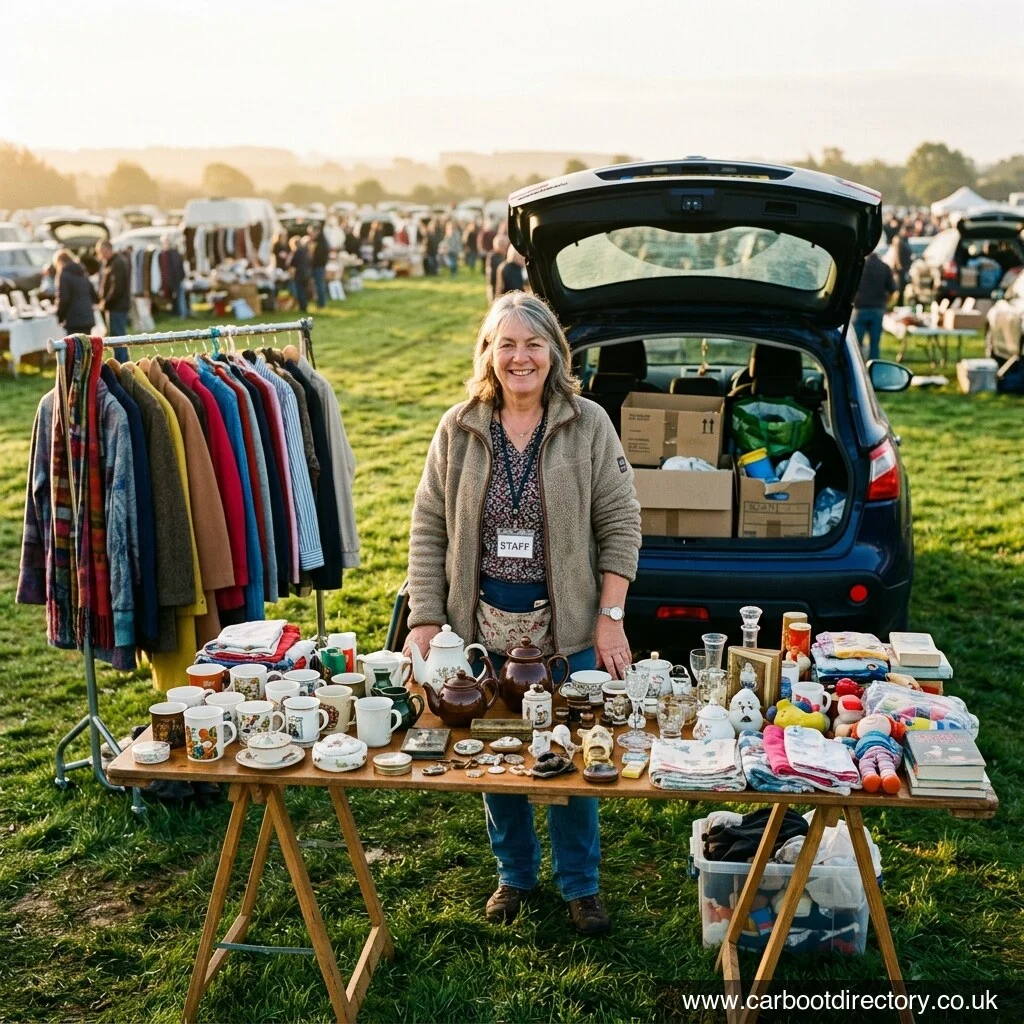
To sell at a car boot sale: pick a busy local boot, price everything the night before, pack the car in reverse order, arrive at the start of the seller window (usually 6–7am), pay the pitch fee in cash — a median £10 — and price to clear, not to keep. Here is the full step-by-step, from first pitch to counting the float.
Selling at a boot is the fastest, most sociable way to turn clutter into cash in Britain — no postage, no listings, no waiting. But your first one goes ten times smoother if you know the routine. Seven steps:
Step 1 — Pick the right sale
Footfall is everything: a busy 500-stall Sunday boot will outsell a quiet field three to one. Use the near-me search to compare local options — every listing shows the seller window, pitch prices and typical size. First-timers do well at mid-size sales: big enough for steady buyers, calm enough to learn the ropes. Check whether your sale is turn-up-and-go or bookable.
Step 2 — Prep and price the night before
- Clean everything. A wiped-down toaster sells; a dusty one doesn’t.
- Sticker prices on the good stuff (£3+), and run a “everything in this box £1” system for the rest — it halves the questions and doubles the browsing.
- Price to clear: 50p–£5 covers most household items (see real price data). The goal is an empty car, not top dollar per item.
- Build your kit: pasting table, £20 float in coins and small notes, carrier bags, bubble wrap, tarpaulin, flask, layers.
Step 3 — Pack the car in reverse
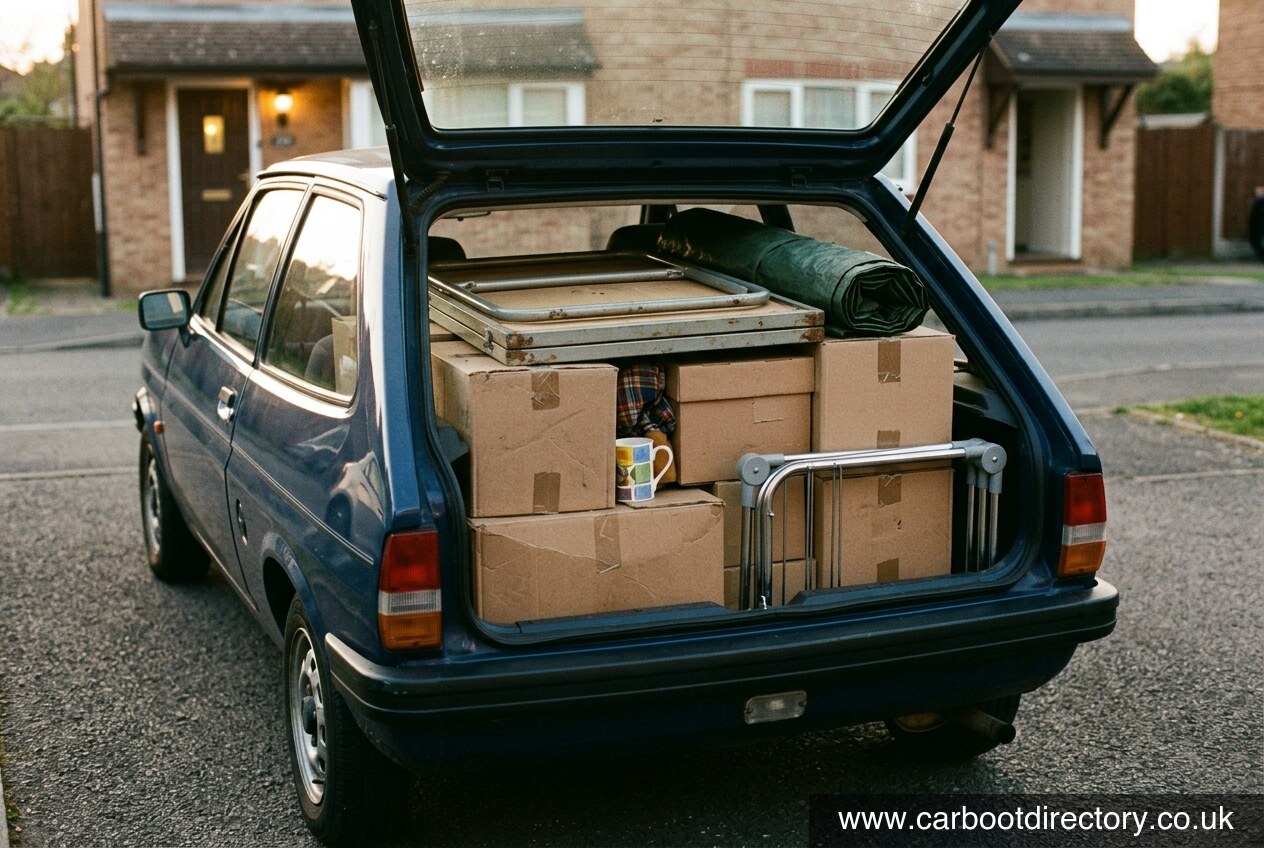
Table and tarpaulin go in last, so they come out first. Boxes of smalls at the back of the boot, furniture and bulky items where you can slide them out without unpacking everything. You’ll be setting up with buyers already hovering — order matters.
Step 4 — Arrive in the seller window
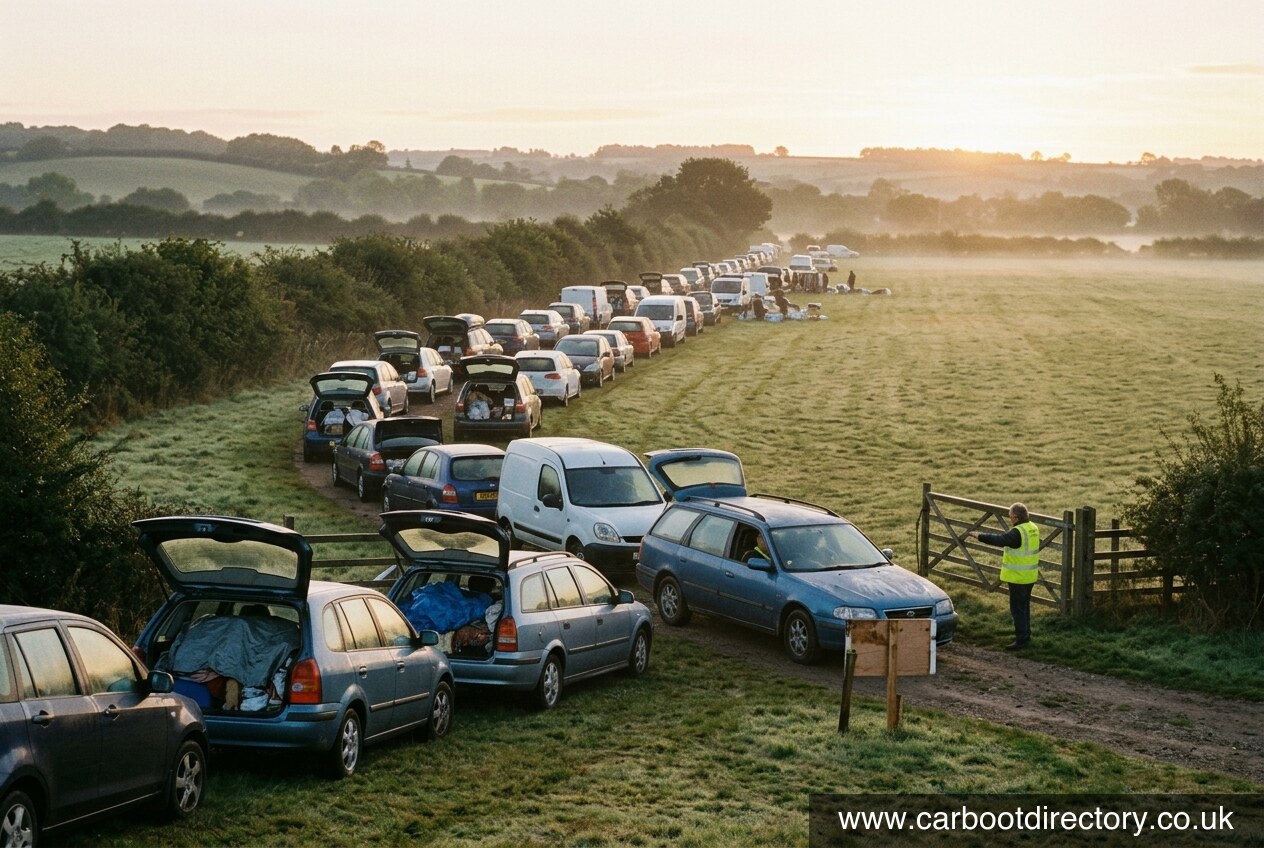
Be at the gate when it opens — typically 6–7am. You’ll pay the pitch fee in cash (median £10 for a car across our 182 listed pitch prices, vans £2–£5 more) and get marshalled to a pitch. Early pitches near the entrance see every buyer of the day. Full fee breakdown: cost to sell guide.
Step 5 — Set up for browsing
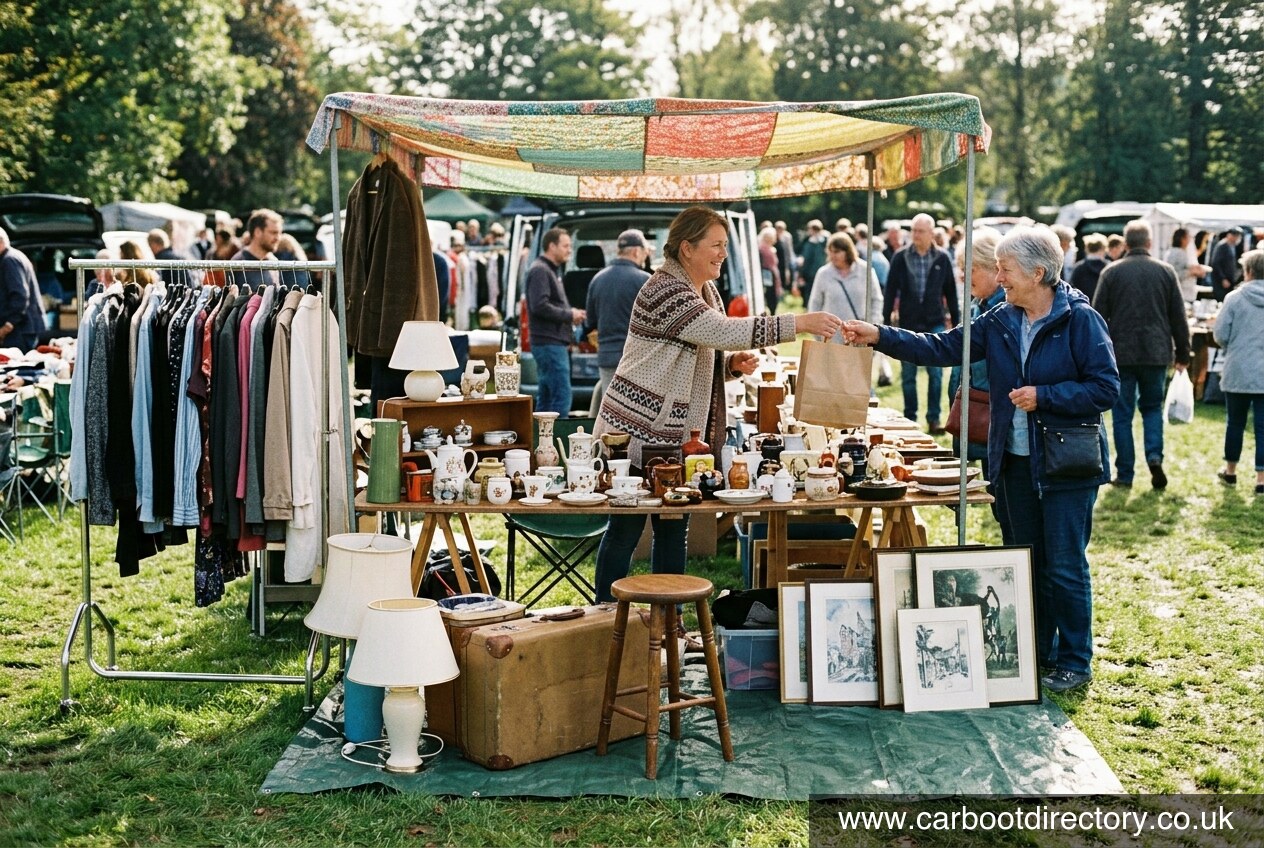
- Eye-level sells: best items on the table, clothes hung on a rail, only bulky things on the tarpaulin.
- Expect the early-bird swarm: dealers will ask what you have while you unpack. Stay friendly, but you’re allowed to say “give me ten minutes” — see our etiquette guide.
- Keep the cash on you, never in a tin on the table — a bumbag or apron is the standard kit.
Step 6 — Sell like a regular
Greet people, take offers seriously, and bundle. Haggling is the culture: build a little room into your prices and treat “would you take £2?” as the start of a sale, not an insult. From 11am, start halving — whatever’s left is going home or to the charity shop anyway. Know what sells best so you price the hot categories with confidence.
Step 7 — Pack down properly
Stay to the advertised end, leave the pitch spotless, count the float at home. Take every box and hanger with you — organisers remember the pitches they had to clear. Unsold decent stock? Straight to the charity shop on the way home, or save it for the next boot.
Selling questions, answered
Do I need to book before selling at a car boot sale?
Usually not — most UK boots are turn-up-and-go: arrive in the seller window, pay the pitch fee in cash at the gate (median £10 for a car) and you’re trading. Larger and indoor venues sometimes take bookings, so check the listing first.
What time should sellers arrive at a car boot sale?
At the start of the seller window — typically 6–7am for a Sunday boot. Early arrivals get the better pitches near the entrance and food vans, and the early-bird buyers carry the most cash.
How much money will I make at my first car boot sale?
Most first-timers with a full car of priced household items take £50–£150 after the pitch fee. Stock quality and venue footfall matter more than salesmanship — a busy 500-stall boot beats a quiet field every time.
Deeper dives: the complete seller’s guide, exact costs, and what sells best. Then pick your first pitch on the near-me search — every listing shows the seller window and pitch price.