
Most sellers take somewhere between £50 and £150 from a car full of ordinary household clutter at a busy Sunday car boot sale, and £200 to £300 or more is realistic with a van, good stock or a well-chosen sale. Take off your pitch fee and you have your profit. These are typical figures that sellers commonly report rather than a guarantee: a quiet field on a wet morning can bring in £20, and one good piece of furniture or a box of collectable records can double a day.
This guide explains what decides your takings, what the pitch will cost where you live, and the small changes that make the biggest difference.
Typical takings at a UK car boot sale
- A car boot of general clutter (clothes, books, kitchenware, toys): about £50 to £150.
- A packed estate car or small van with some furniture, tools or electricals: about £150 to £300.
- A regular seller with sourced or collectable stock: anything from £200 upwards, but with the cost of buying the stock to take off.
Everything at a car boot sells for pounds, not tens of pounds. Most household items go for 50p to £5 (see our car boot price guide), so your takings come from volume: selling eighty items at £1.50 each is how a £120 day happens.
What decides how much you make
- The sale you pick. Footfall matters more than anything else. A big weekly Sunday boot with hundreds of stalls puts far more buyers past your pitch than a small village fund-raiser. Use the near-me search to compare local sales by size.
- What you bring. Children's clothes and toys, tools, garden gear, small furniture, retro homeware and branded clothing sell fast. See what sells best at car boot sales.
- How you price. Priced items sell; unpriced ones get walked past. Price to clear, not to get top value per item.
- The weather and the season. A dry, bright Sunday in May or September is the best day of the year. Rain halves the crowd.
- Arriving early. Dealers and keen buyers come at the start of the seller window. If you are still unpacking at 8am you miss them.
What it costs to sell
Your main cost is the pitch fee, usually paid in cash on the gate. The table below is worked out from every published listing on this site each time the page loads, so it is always current and shows how many sales each figure comes from.
Pitch prices by region
| Where | Car pitch | Van pitch | Buyer entry | Early entry |
|---|---|---|---|---|
| UK median | £10 256 listings | £14 162 listings | £0.50 332 listings | £3 41 listings |
| East Midlands | £8 31 listings | £10 23 listings | £1 36 listings | £3 5 listings |
| East of England | £10 36 listings | £12 26 listings | £0.50 48 listings | £2.50 8 listings |
| Greater London | £15 17 listings | £17.50 14 listings | Free 37 listings | £3 7 listings |
| North East | £12 9 listings | £16 6 listings | £1 12 listings | £3 1 listing |
| North West | £10 19 listings | £15.50 14 listings | £0.50 22 listings | £2.50 2 listings |
| Scotland | £14.50 14 listings | £22 3 listings | Free 19 listings | — no published price |
| South East | £10 46 listings | £15 26 listings | £1 57 listings | £2 12 listings |
| South West | £8 34 listings | £10 17 listings | £0.50 44 listings | £2.50 2 listings |
| Wales | £8 9 listings | £11 5 listings | £0.50 10 listings | — no published price |
| West Midlands | £10 22 listings | £15 17 listings | Free 23 listings | £3.50 2 listings |
| Yorkshire | £8 19 listings | £14 11 listings | £1 24 listings | £3 2 listings |
Pitch prices in the towns we cover most
| Town | Car pitch | Van pitch | Buyer entry | Early entry |
|---|---|---|---|---|
| Edinburgh | £14.50 2 listings | £23 1 listing | £2 2 listings | — no published price |
| Camden | £10 1 listing | £17 1 listing | Free 5 listings | — no published price |
| London | £20 3 listings | £27.50 2 listings | Free 5 listings | — no published price |
| Nottingham | £10 3 listings | £12 2 listings | £1 5 listings | — no published price |
| Bristol | £12.50 2 listings | £17.50 2 listings | Free 3 listings | — no published price |
| Glasgow | £20 2 listings | — no published price | Free 4 listings | — no published price |
| Manchester | — no published price | — no published price | Free 2 listings | — no published price |
| Norwich | £8 1 listing | £15 1 listing | Free 4 listings | — no published price |
| Westminster | £10 1 listing | £15 1 listing | Free 4 listings | £7 1 listing |
| Cardiff | £5 1 listing | £5 1 listing | Free 1 listing | — no published price |
| Chelmsford | £12.50 2 listings | £17.50 2 listings | £1 3 listings | £3 2 listings |
| Colchester | £12.50 2 listings | £17.50 2 listings | £1 3 listings | — no published price |
| Exeter | £8 1 listing | — no published price | £1 2 listings | — no published price |
| Guildford | £15 1 listing | £15 1 listing | £3 3 listings | — no published price |
| Leeds | £11.50 2 listings | £14 2 listings | £1 3 listings | £3 1 listing |
Computed from 381 published listings, October 2026. Medians, not averages: half the sales in each row charge less. Each cell shows how many listings published that price. A price shown as an em dash means no sale in that group publishes one. How each listing is checked is set out on how we verify listings.
Add fuel, perhaps a parking charge, and a bacon roll and tea, and a first car boot usually costs £15 to £25 all in. The full breakdown is in how much it costs to sell at a car boot sale.
Estimate your own day
Put in roughly how many items you are taking and what you expect them to go for, and the calculator takes off a typical local pitch fee.
Work out what a pitch could leave you
This uses your own estimates for items and prices; we do not collect sellers' takings. The pitch fee is the median for the region you pick, computed from our listings.
An estimate, not a forecast: what a pitch takes depends on the sale, the weather and what you bring. Selling your own unwanted things is not trading, but if you buy to resell, read the HMRC guidance on the £1,000 trading allowance and our rules, tax and permission guide.
Pitch fees used by this calculator
| Region | Car pitch | Van pitch |
|---|---|---|
| UK median | £10 | £14 |
| East Midlands | £8 | £10 |
| East of England | £10 | £12 |
| Greater London | £15 | £17.50 |
| North East | £12 | £16 |
| North West | £10 | £15.50 |
| Scotland | £14.50 | £22 |
| South East | £10 | £15 |
| South West | £8 | £10 |
| Wales | £8 | £11 |
| West Midlands | £10 | £15 |
| Yorkshire | £8 | £14 |
Computed from 381 published listings, October 2026. Medians, not averages: half the sales in each row charge less. Each cell shows how many listings published that price.
Ten ways to make more
- Price everything the night before, with stickers on anything over £3 and a "£1 box" for the rest.
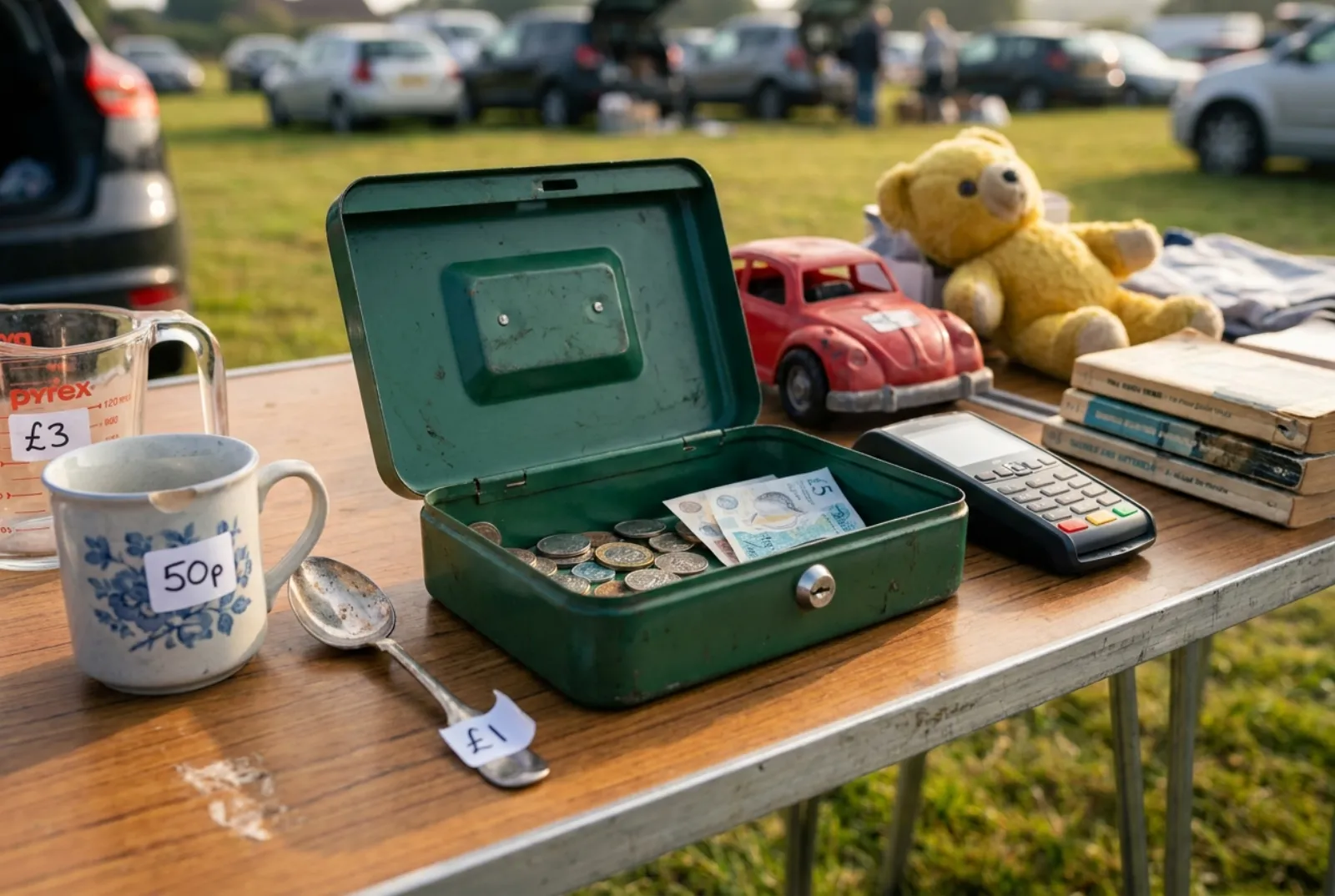
- Bring a float of about £20 in coins and small notes. Lost sales for want of change are common in the first hour.
- Take card payments if you can: a phone card reader or a bank transfer QR code catches buyers who have run out of cash.
- Put the best things at the front and at eye level. Clothes on a rail sell far better than clothes in a box.
- Clean and test everything. A working toaster with its plug wiped sells; a dusty one does not.
- Keep sets together: a matching set of glasses sells where six odd ones do not.
- Bundle: "three for £2" moves books, DVDs and toys.
- Expect to haggle and price with a little room. Our haggling guide covers both sides of the table.
- Drop prices from late morning. Whatever goes home with you is worth nothing today.
- Go again. Your second car boot is almost always better than your first, once you know what sells.
What not to bring
Some things will not sell, and some are not allowed at all. Leave them at home: see what not to sell at a car boot sale.
Ready to go? The step-by-step selling guide and the printable seller checklist cover the morning itself.
Frequently asked questions
How much money can you make at a car boot sale?
Most sellers take about £50 to £150 from a car load of ordinary household items at a busy sale, and £150 to £300 or more with a van or better stock. Take off a pitch fee of roughly £8 to £15 for a car to get your profit.
Is a car boot sale worth it?
For clearing clutter, usually yes. Even a modest day of £60 to £80, less a £10 pitch, is a good return for a morning, and it empties the loft faster than listing items one by one online. Sell valuable single items online instead, where more buyers will see them.
Do I have to pay tax on car boot sale money?
Not if you are selling your own unwanted belongings occasionally. If you buy items to resell, or sell regularly to make a profit, you may be trading, and HMRC's trading allowance and rules apply. Check the HMRC guidance on selling online and at car boot sales if you are unsure.
What time of year makes the most money?
Spring and early autumn. Late April to June and September bring the biggest crowds; the height of summer can be quieter when people are away, and most field sales close for the winter.
Find a car boot sale near you
Put the advice to use this weekend. Hand-checked sales with times, entry fees and directions.
Keep reading
Guides
What Not to Sell at a Car Boot Sale (UK Rules)
What can't you sell at a car boot sale? Knives to under-18s, banned weapons, fireworks, alcohol, medicines, fakes and more are illegal or restricted. Plus the things that simply won't sell.

Car Boot Sale Rules UK: What You Can't Sell, Tax & Permission
What is illegal to sell at a car boot sale, when HMRC counts it as trading, whether you need permission to run one, and why they start so early.
Bank Holiday Car Boot Sales 2026: Dates & What to Expect
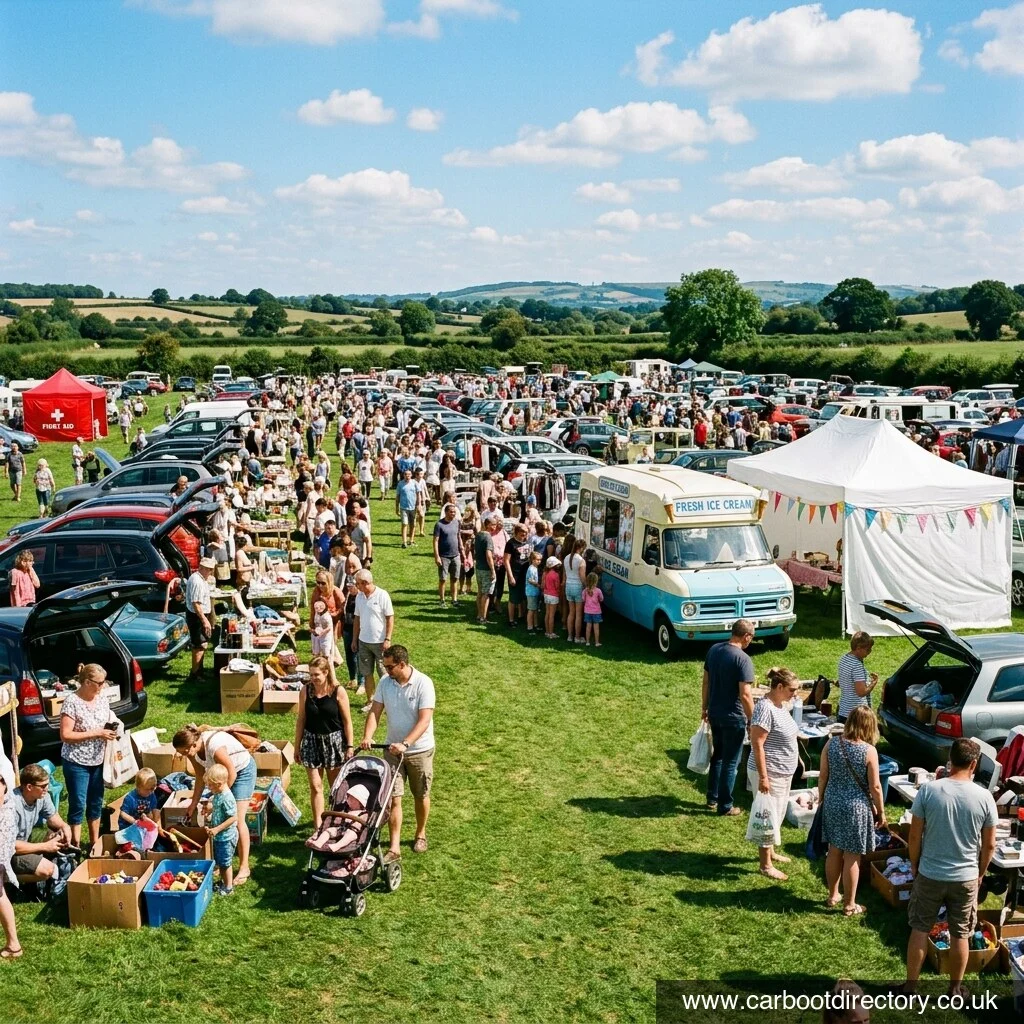
Every England & Wales bank holiday boot date for 2026–27, what makes BH Mondays the biggest trading days, and where to find the sales that open.