
Car boot sales are lightly regulated, but three rules catch people out: you cannot sell counterfeit, unsafe or age-restricted goods; buying stock to sell on makes you a trader in HMRC's eyes above the £1,000 trading allowance; and running a sale needs the landowner's permission plus, in most areas, the council's. Here is the practical version of each.
What you can't sell at a car boot sale
Most of what fills a Sunday field is fine: clothes, toys, books, kitchenware, tools, bric-a-brac. The items below are either illegal to sell, illegal to sell without a licence, or banned by almost every organiser.
| Item | Can you sell it? | Why |
|---|---|---|
| Counterfeit clothing, bags, perfume, trainers | No | Trade Marks Act offence. Trading Standards visit boot sales and seize stock. |
| Copied DVDs, games, software | No | Copyright offence, even for "backups". |
| Electricals that are damaged or untested | No | Goods must be safe under the General Product Safety Regulations. A frayed kettle lead is your liability. |
| Sofas, armchairs, mattresses without a fire label | Not as a trader | Furniture fire-safety rules apply once you sell regularly. Casual sellers clearing a house are usually fine, but check the label is attached. |
| Knives, swords, air weapons, replica guns | Restricted | Bladed items cannot go to under-18s; some are banned outright. Air weapons need a registered firearms dealer to sell. |
| Alcohol and tobacco | No | Both need a licence. Vapes are age-restricted too. |
| Prescription and over-the-counter medicines | No | Medicines can only be sold by licensed sellers. |
| Home-made food, cakes, jam | Organiser permission | Food sellers must register with the council and most organisers want a hygiene rating certificate. |
| Live animals | No | Selling pets needs a council licence; almost every organiser bans it. |
| Fireworks | No | Licensed sellers only, and only in fixed windows of the year. |
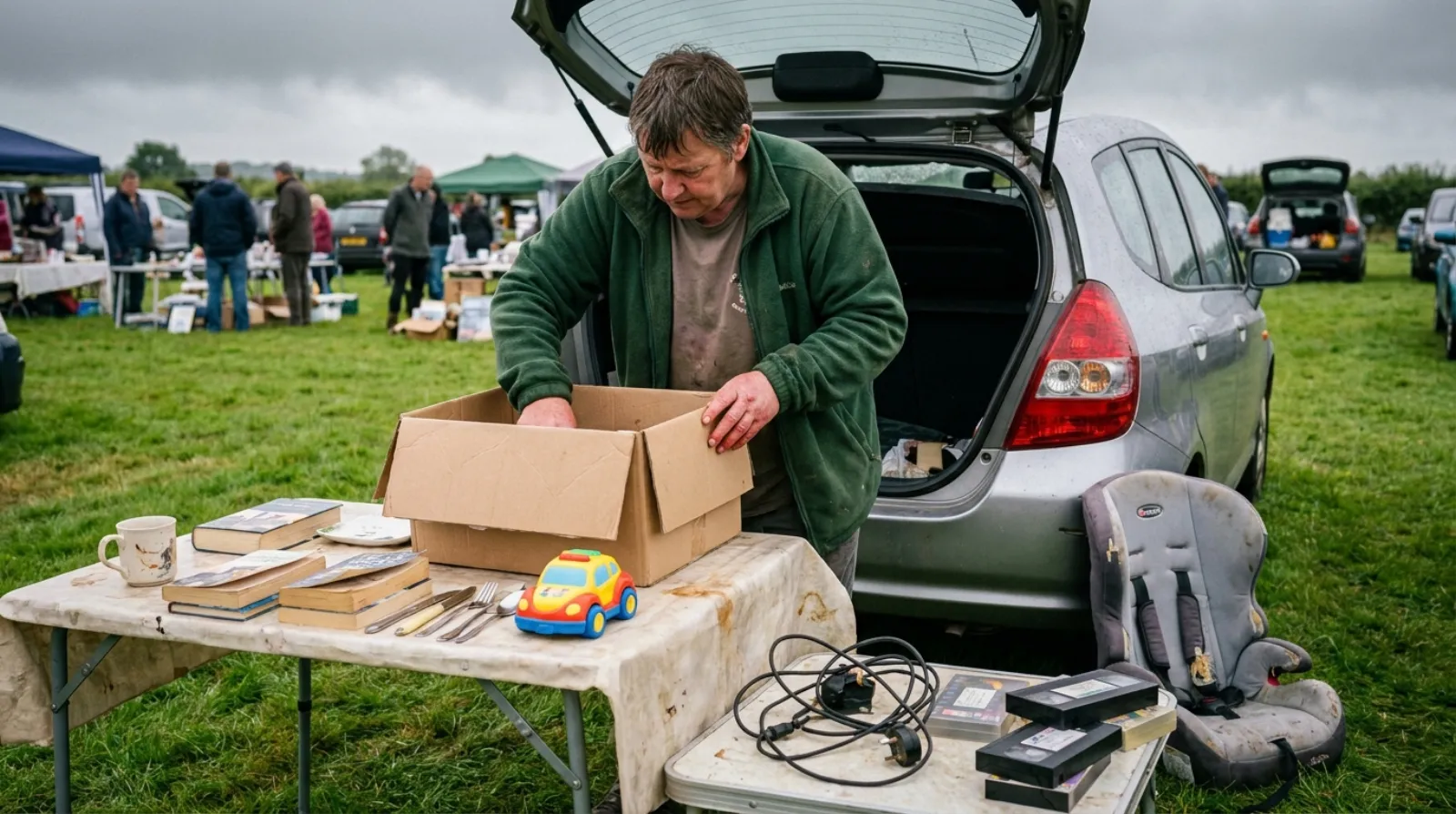
| Recalled products, second-hand car seats, cycle or motorbike helmets | Legal but avoid | A car seat that has been in a crash or a helmet with a hidden knock can fail. Reputable sellers do not sell them. |
| New goods bought to resell | Usually yes | Legal, but you are trading (see tax below) and some organisers limit or ban new stock. |
The organiser's rules sit on top of the law. Many sales ban food, animals, and traders with new goods, or charge a higher pitch fee for traders. The listing pages on this site show what each sale allows where we know it, and the organiser's own page or gate sign is final.
Do you have to declare car boot sale income?
Selling your own belongings is not taxable. HMRC treats clearing the loft, the kids' outgrown clothes or your old records as disposing of personal possessions, not trading. The only exception is a single item, or set, sold for more than £6,000, which can attract Capital Gains Tax.
Buying things to sell on is trading. If you buy stock from wholesalers, clearance auctions or other boot sales with the aim of selling it at a profit, HMRC counts that as a business. Every person gets a £1,000 trading allowance per tax year: if your gross takings from trading are under £1,000 you owe nothing and do not need to tell HMRC. Above that, you register for self-assessment and declare the profit.
| Situation | Taxable? | What to do |
|---|---|---|
| Clearing out your own house once or twice a year | No | Nothing. Enjoy the cash. |
| Selling your own possessions every week | No, usually | HMRC looks at intent, not frequency. Keep it to things you owned and used. |
| Buying job lots to sell, under £1,000 a year | No | Covered by the trading allowance. Keep a note of takings anyway. |
| Buying to sell, over £1,000 a year | Yes | Register for self-assessment by 5 October after the tax year ends. Declare profit, not turnover. |
| Making things (crafts, prints) to sell | Yes, above £1,000 | Same trading rules as buying to sell. |
Can you sell new items at a car boot sale?
Yes, at most sales, and the trader's row of phone cases and socks is a fixture at the big ones. Two things change once your goods are new. First, you are trading, so the tax rules above apply and consumer law does too: buyers can return faulty new goods to you. Second, many organisers either ban new goods entirely, cap the number of traders, or charge them a higher pitch. Check before you load the van.
Do you need permission to run a car boot sale?
Running a sale is more paperwork than selling at one. You need:
- The landowner's written agreement. A farmer's field, school playground, pub car park or racecourse all need the owner's consent, and they will want to see your insurance.
- Public liability insurance. Typically £5 million cover. Landowners and councils ask for the certificate.
- Council notification. Most councils ask organisers of car boot sales to tell them in advance, and some require a temporary market notice or consent. Anything on the pavement or road needs a street trading consent.
- Planning. Temporary use of land for a market is allowed for a limited number of days a year under permitted development in England (currently 14 days for markets). Regular weekly sales need the land's planning position checked.
- Charity collections. If you are collecting for a charity rather than charging a pitch fee, a street collection or house-to-house licence may apply.
Rules differ across England, Wales, Scotland and Northern Ireland, so the first call is always your council's licensing or markets team. Once you have a date, list the sale free on this site so buyers can find it.
Why do car boot sales start so early?
Four reasons. Sellers need daylight and empty roads to unload, and a queue of 300 cars takes an hour to get on to a field. Dealers arrive first and pay early-bird entry to have the pick of the stock, which is where organisers make money. Fields, school car parks and racecourses usually have to be clear by early afternoon. And, honestly, a Sunday boot that opened at 10am would run into the heat, the rain and the football. Indoor and afternoon boots are the exception, and every listing here shows its own buyer and seller times. See what time car boot sales start for the full timetable.
How much money can you make at a car boot sale?
A well-stocked car pitch typically clears £50 to £150 on a good morning, and £200 or more is possible with a rail of decent clothes, tools or collectables. The pitch itself is cheap: the median seller fee across the sales listed here is £10, with a car pitch anywhere between £6 and £15. Most individual items go for 50p to £5, so volume matters more than the odd big sale. Our car boot sale prices guide has the live figures and what sells best lists the stock that does the heavy lifting.
Is it worth doing a car boot sale?
If you have a car's worth of decent stock, yes: three hours of standing behind a table turns clutter into £100 and clears the garage. It is not worth it for a few bin bags of tired clothes, which will earn less than the pitch fee. Price low, arrive at the seller time, bring a float of coins and a rail, and be ready to bundle from 11am. The step-by-step selling guide covers the rest.
When did car boot sales start?
The British car boot sale is widely credited to Father Harry Clarke, a Catholic priest in Stockport, who saw "trunk sales" on a trip to Canada and ran the first one in the 1970s to raise church funds. By the mid-1980s they were a national weekend habit, and today there are thousands across the UK each summer. The name comes from the boot of the car the goods are sold from, which is why our American cousins call them trunk sales and the Australians call them car boot markets too.
Frequently asked questions
Can Trading Standards check my stall?
Yes. Trading Standards and the police visit larger sales, particularly for counterfeit goods and unsafe electricals. Genuine second-hand goods sold by a private seller are of no interest to them.
Do I need a licence to sell at a car boot sale?
No. Private sellers pay the pitch fee and that is it. Only organisers, food sellers and sellers of licensed goods such as alcohol need council paperwork.
Can children sell at a car boot sale?
Most organisers are happy for children to help on a family pitch, and it is a good way to learn about money. A child cannot book a pitch in their own name.
What happens if I sell something faulty?
A private seller has no obligation beyond honesty: describe the item truthfully and do not claim it works if you have not tested it. A trader selling new or refurbished goods must give refunds for faulty items under the Consumer Rights Act.
Find a car boot sale near you
Put the advice to use this weekend. Hand-checked sales with times, entry fees and directions.
Keep reading
Guides
How Much Can You Make at a Car Boot Sale?
How much money can you make at a car boot sale? Most first-timers take £50 to £150 from a car load of household clutter. What decides it, what the pitch costs, and how to take more.
What Not to Sell at a Car Boot Sale (UK Rules)
What can't you sell at a car boot sale? Knives to under-18s, banned weapons, fireworks, alcohol, medicines, fakes and more are illegal or restricted. Plus the things that simply won't sell.
Bank Holiday Car Boot Sales 2026: Dates & What to Expect
Every England & Wales bank holiday boot date for 2026–27, what makes BH Mondays the biggest trading days, and where to find the sales that open.